


This is a post that was sitting in the “drafts” for a while and I’d been meaning to share. This particular foray took place back in October 2024.
Bukit Wawasan is a nearby escape into nature for many in Kuala Lumpur and it rarely disappoints. The forest’s diversity makes every visit exciting, though the steep uphill climb is a price to pay.
With friends, we braced for another long trek under the weight of midday heat.
The humidity felt like a soaking weighted blanket, but as we climbed, it gave way to something worse, the sound of a bone-dry crunch underfoot, the telltale sign of not expecting to find many mushrooms.
We kept scanning the ground out of habit, half-expecting to find something.


I hear a sharp shriek of part excitement, part disbelief from Siew. We rushed over and there, standing alone by a fallen log at a switchback, was a single, brilliant orange bolete.
I don’t think I’ve seen a stipe that orange before, not even Crocinoboletus.
Later, flipping through A Guide to Macrofungi in Singapore, I found the name of the orange bolete: Tylopilus cervinicoccineus and it would be the first observation on iNaturalist.
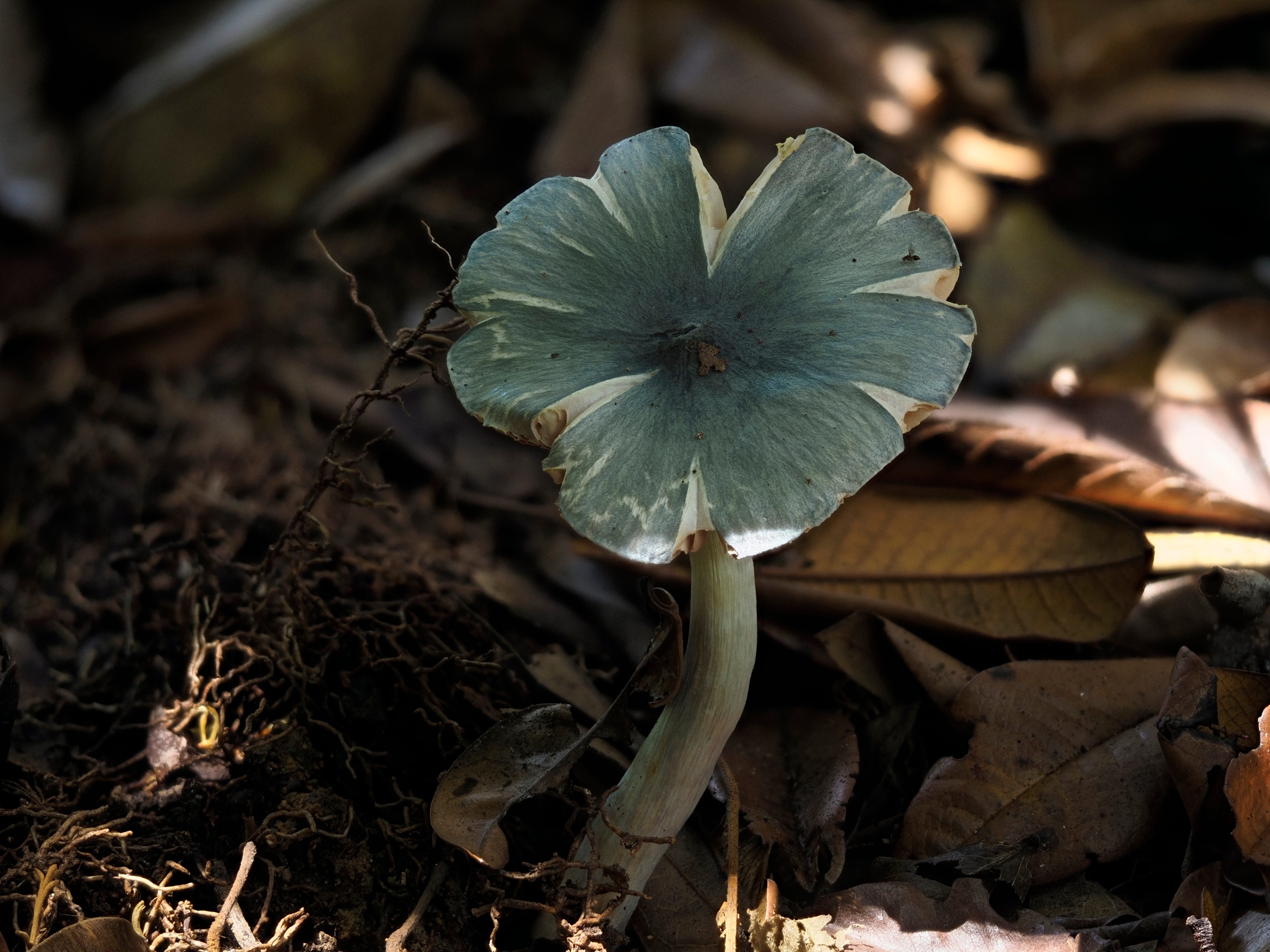
Next to it, a pale blue-green Entoloma. And just a few steps away, jutting from the side of the track, a small purple mushroom, possibly a Chromosera sp.
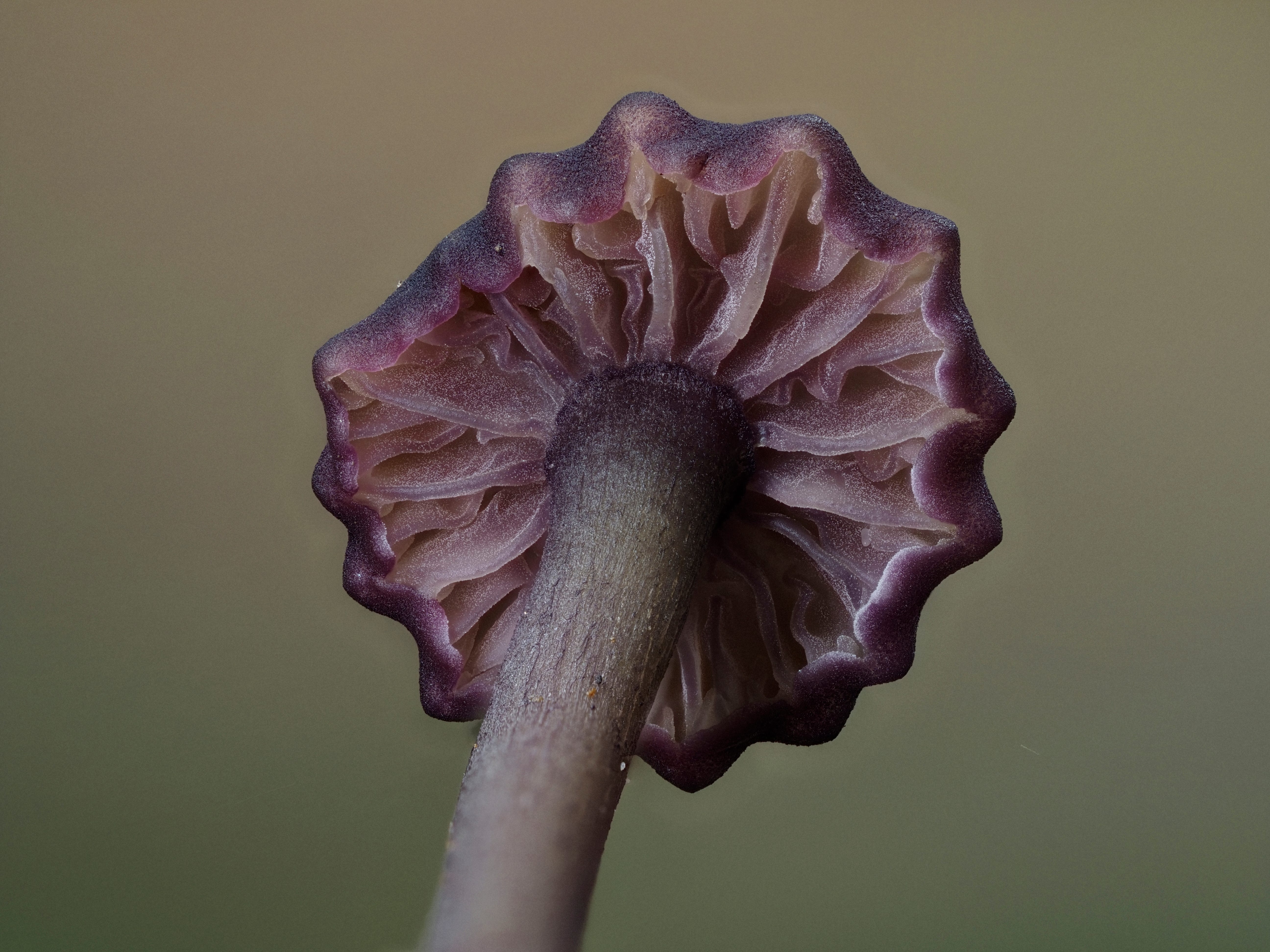
One of the more texturally-interesting finds was made by Jerry. A lone Incocybe species - common name: Fibre Caps, and with this example, I can see why. We dubbed it Gandalf’s Cap.


And that’s how it goes sometimes. Hours of searching, nothing but dried leaves and disappointment, and then just like that you hit a pocket of growth that becomes the highlight of the foray.
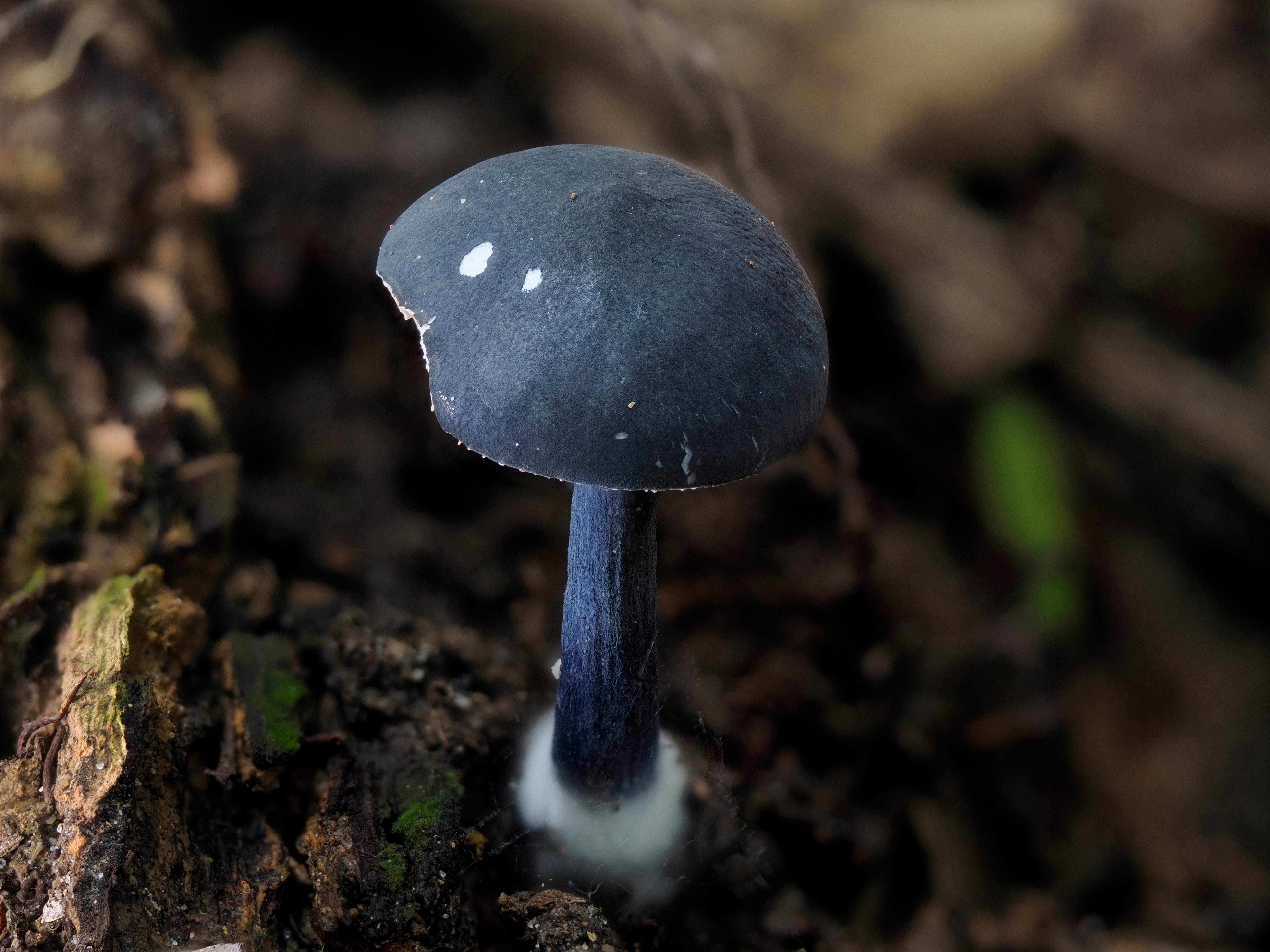


To cap off the day, Elyse found her usual log and on the end were special Neonothopanus nambi also known as Ghost Ear mushrooms. It had been my goal to find these to experiment shooting them glowing.
N. nambi is something of the OG of modern bioluminescent fungi research and helped scientists unravel the fungal light-producing pathway. Researchers later identified the genes responsible and transferred the system into tobacco plants (creating plants that glow continuously using their own metabolism).
N. nambi provided much of the blueprint for understanding how fungal bioluminescence actually works and it was fun to photograph these for the first time.


These are amazing pictures. I especially like the brilliant orange bolete. Very cool
Endlessly interesting!