


I’d been bracing for heavy rain and wind here at the top of the South Island as Cyclone Vaianu made its way down from the north. The day brought heavy rain and gusts, and the kind of weather that makes the bush feel off limits.
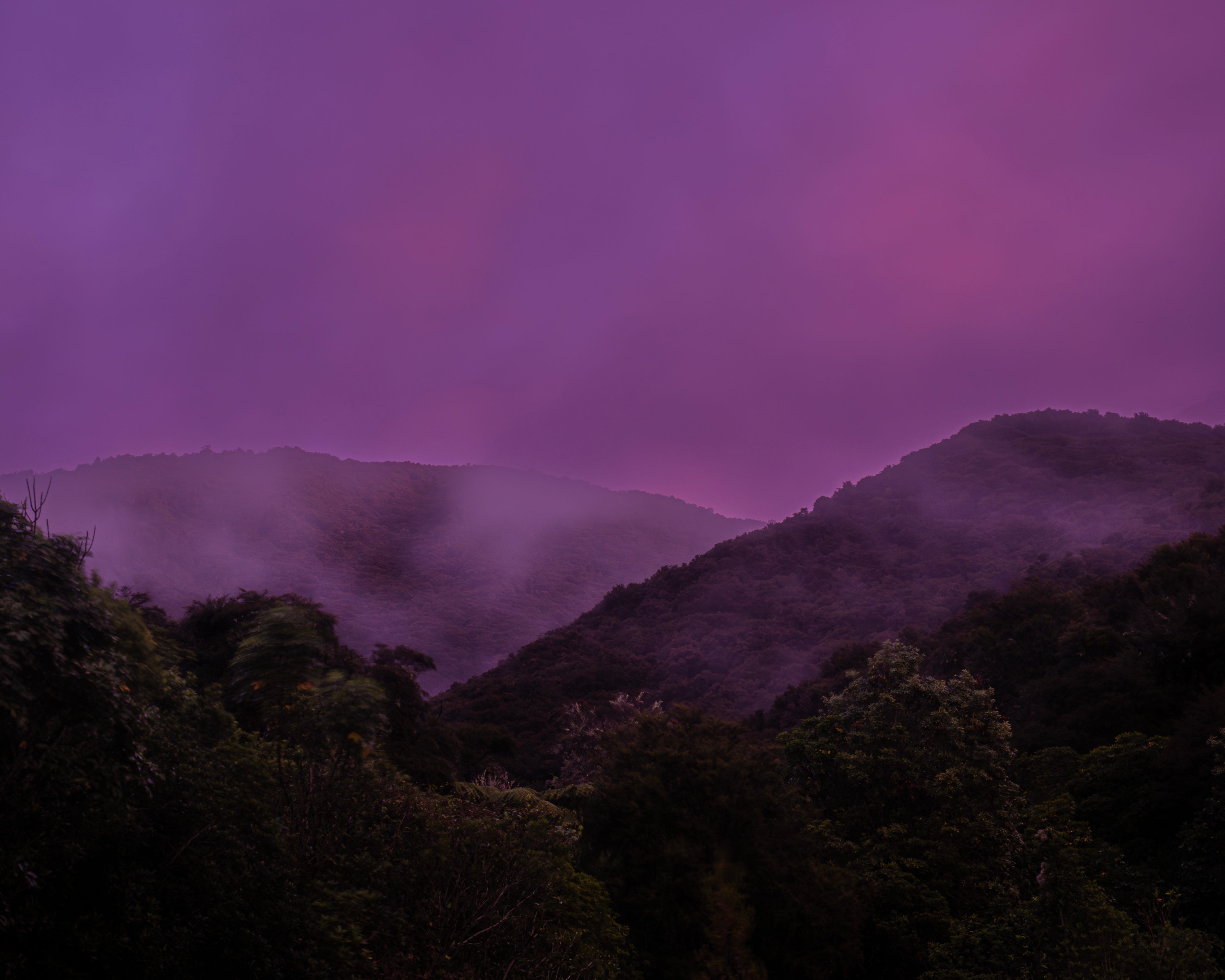
Then, by evening, the rain eased and a pinkish-purple sunset opened over one of my favourite bits of forest, and the whole place seemed to shift mood. Like the bush was calling to me. I had a strong feeling about one particular mushroom, a species I had wanted to find for well over a year.
So I headed to the Momorangi Experience Track and took the side trail that goes back deeper into the bush and follows the stream. It’s a place I keep returning to.
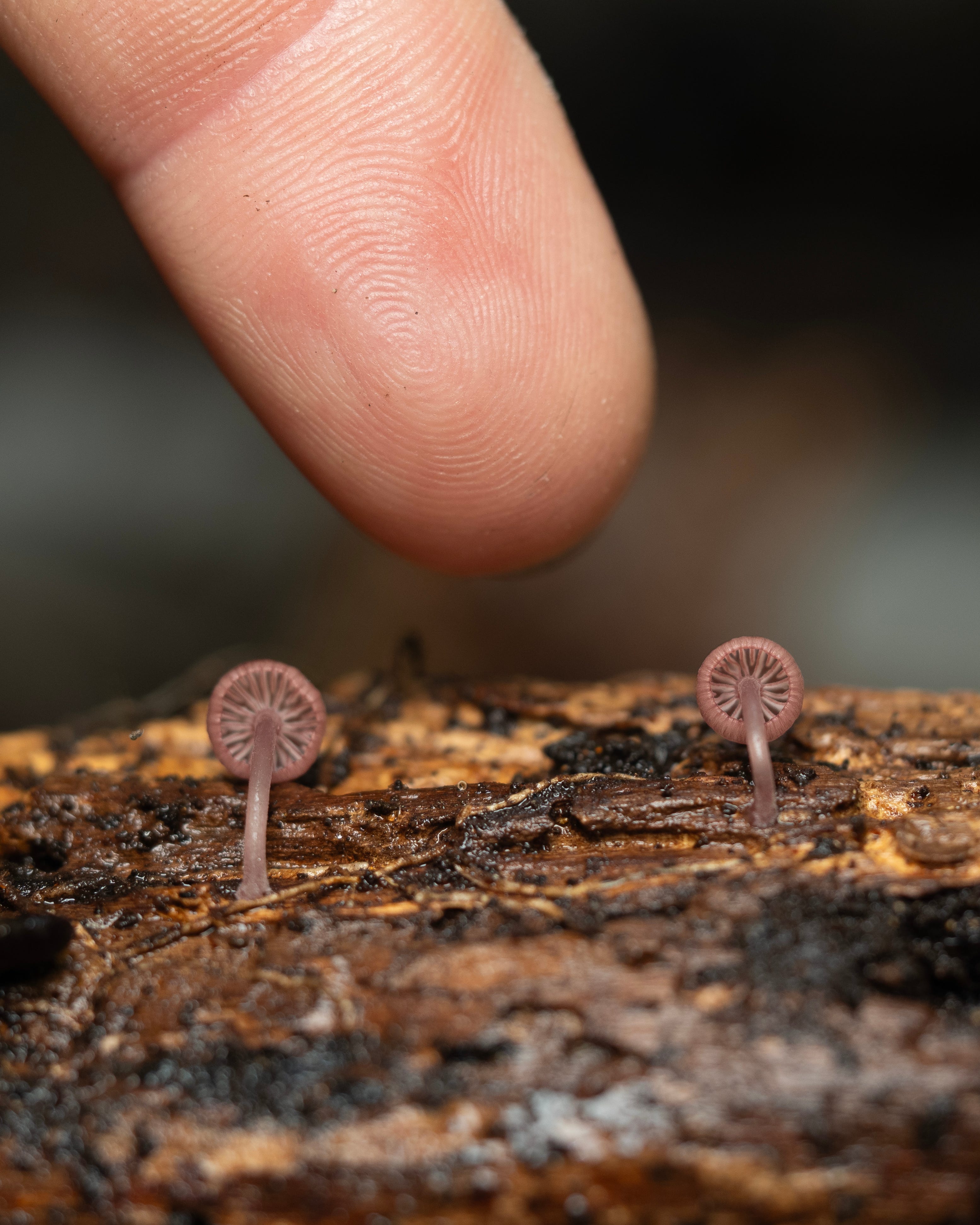
Almost immediately I spotted them, tucked away in the damp bush, tiny pink mushrooms growing from rotten wood.


What made the moment feel even more meaningful was the overlap with last year’s find. It was here, in almost the same spot, that I found Mycena podocarpi (another tiny maroon species with bioluminescent mycelium).
That earlier discovery pulled me even deeper into this small group of red, pink, and maroon Mycena, especially the species that sit in or around sections like Rubromarginatae and Calodontes.
A Night of Blue and Green Bioluminescence in Momorangi Bay

Last week, I camped at Momorangi Bay between Havelock and Picton in New Zealand’s Marlborough Region. Just behind my campsite was a sign: “Glow Worms.” And short trails led into fern and podocarp forest, so at night, I set out to photograph them.
I have become a little obsessed with them.
Part of that fascination goes back to my time in Kuala Lumpur, where I came across similar-looking Mycena that glowed. Ever since then, I have wanted to find and photograph New Zealand’s own tiny red species. They’re delicate and can be easily overlooked.
A 2023 Roundup of Malaysian Bioluminescent Fungi Finds

For my loyal followers, you're probably familiar with my fascination for a rare trait in mushrooms: bioluminescence. Yes, I'm talking about those magical fungi that glow on their own.
By my count, there are currently 2 observations of Mycena oratiensis on iNaturalist in New Zealand, with one in the North Island. And this one from the South Island, which would make it the second.
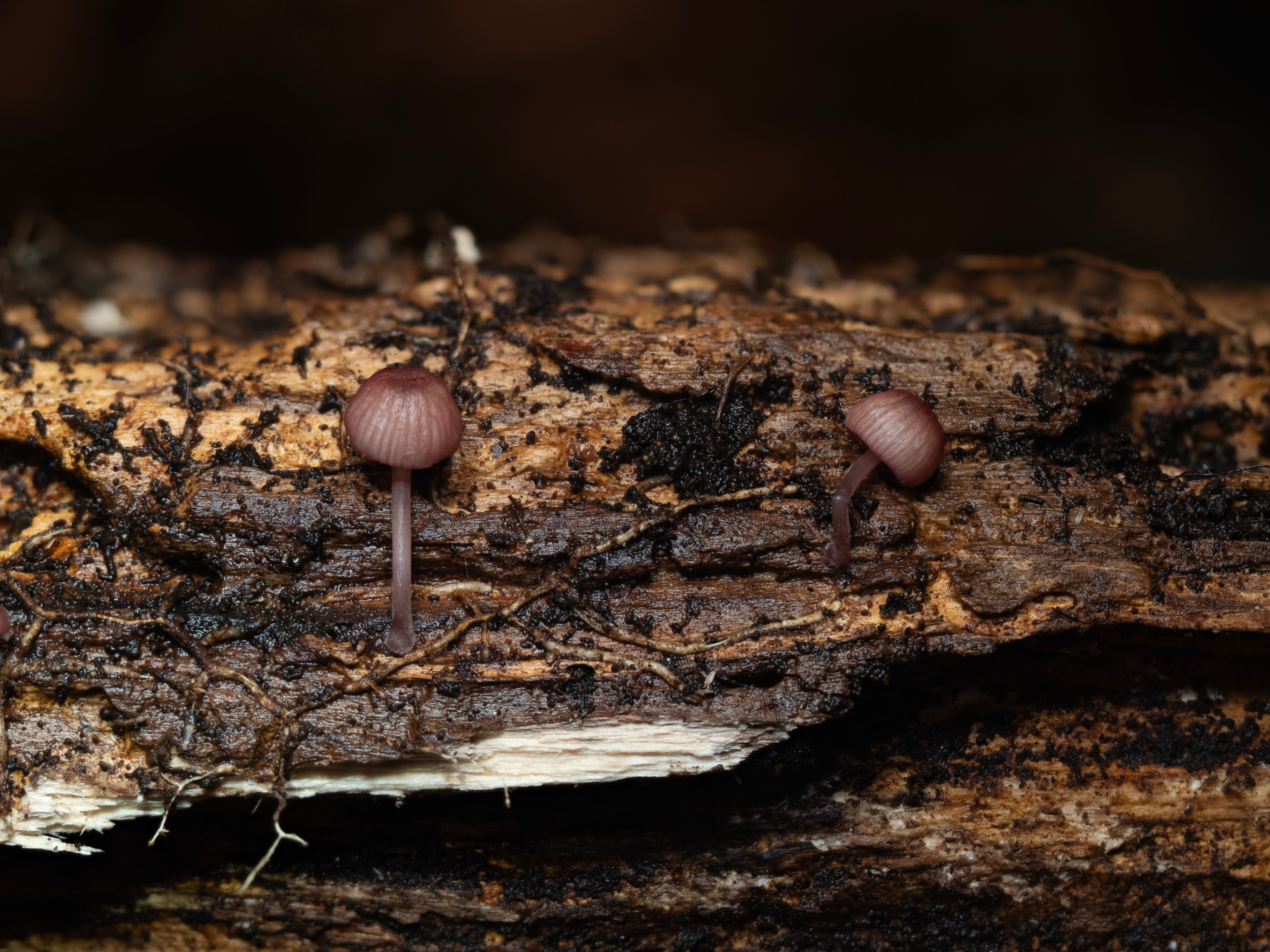
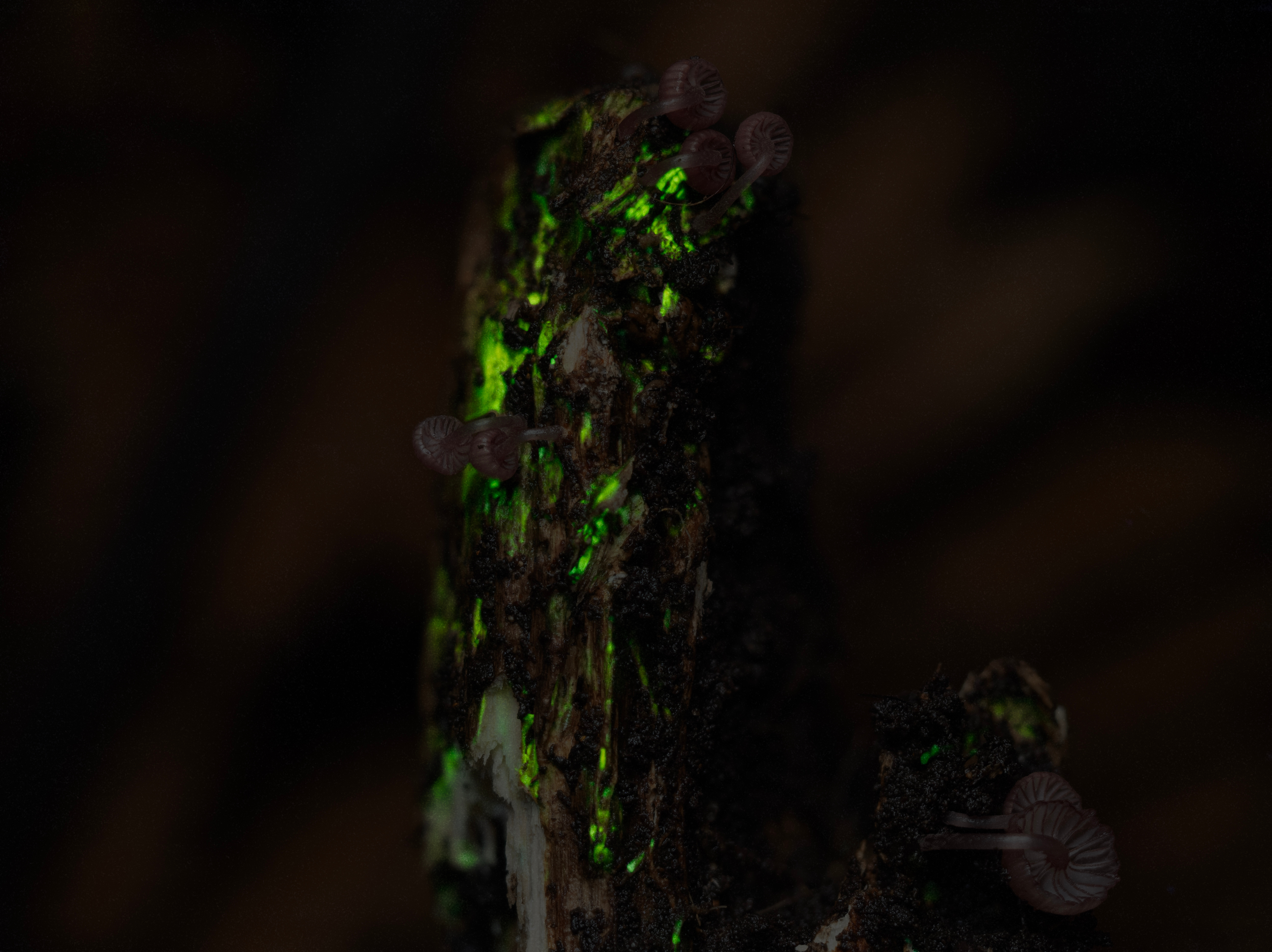
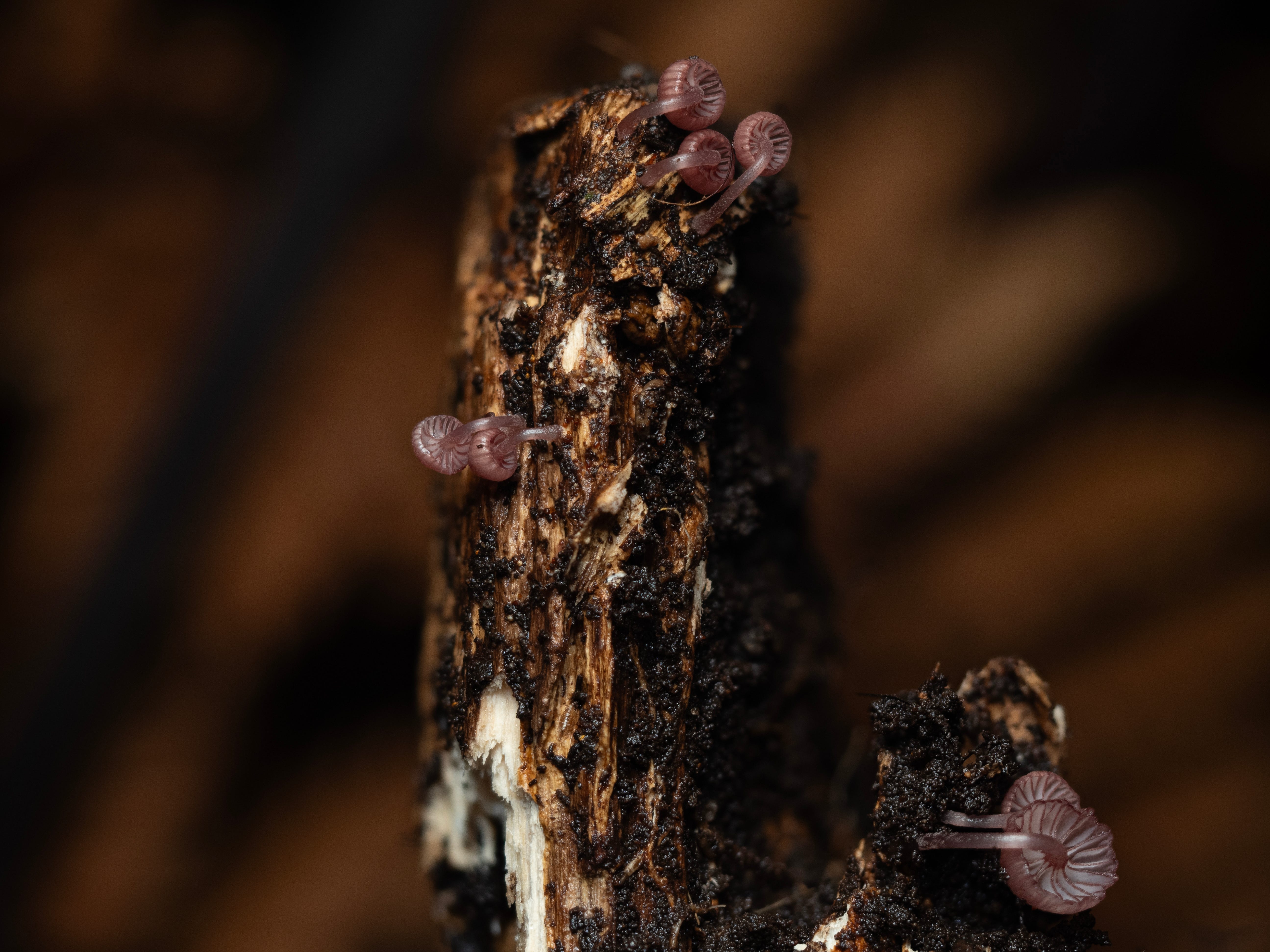
You carry a species around in your head for months or years, piecing it together from papers, records, and other people’s observations. You start to know it before you have ever seen it. Then one day it’s just there in front of you.
Just a meeting with something I had hoped to find for a very long time, in a patch of bush I love, after a storm. I think those are often the best finds.
Look at those marginate gills! So cool
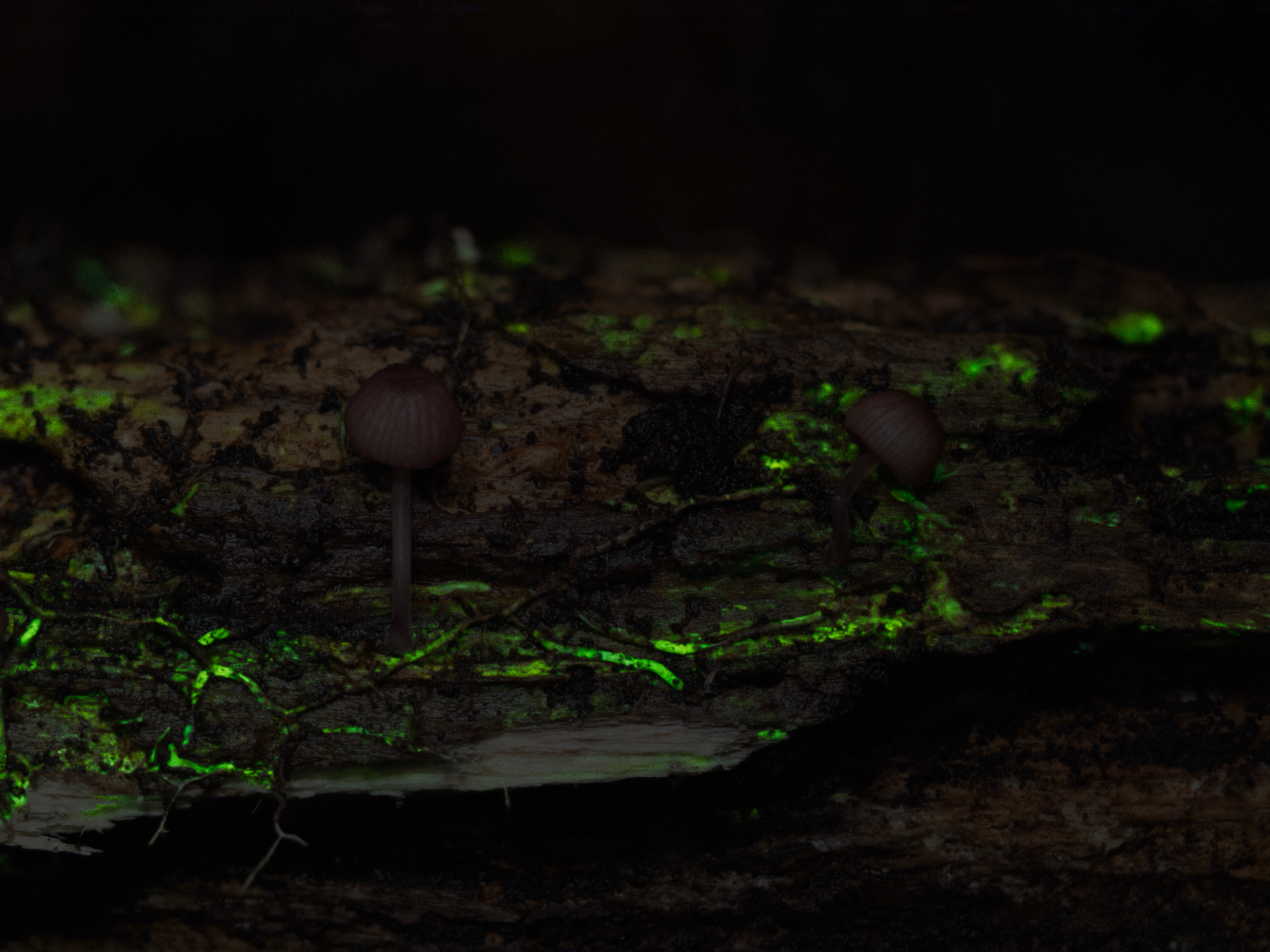
Why is their mycelium bioluminescent? What purpose does it serve the species?