


A few weeks ago it was full of rain and overcast skies, which made for ideal conditions to poke around the forest floor and see what interesting species were beginning to surface.
With seven days of camping at Peel Forest, I shot close to 30,000 images in JPG and RAW, then began the long process of stacking and processing. I feel bad for my poor laptop and harddrive!
But the main highlight of the trip was finally meeting Paula Vigus in person. Paula is a mycophile, photographer, and online friend I’ve known for nearly six years.
She recently published her new book, A Hidden World: Discovering the Beauty of New Zealand’s Fungi.
It’s a book with spectacular images you can spend quite a bit of time admiring. In my opinion she is one of the best fungi photographers in the country and spending time with her was a real privilege. I learned a lot and came away feeling inspired to rethink how I photograph.
We met up in the morning with the goal of walking the Fern Trail, but got distracted, accidentally took the Big Tree Track instead, and ended up heading onwards (and upwards) toward Acland Falls. The foray lasted six hours, and although it was a long and steep uphill day, we found some really interesting species along the way.


My first encounter was with a Coelostomidia zealandica / great giant scale parasitized by Akanthomyces sp. I spotted it embedded in a rotten bit of wood. It looked like it crash landed there.
The second image shows the closer cone-like projections (which are covered in microscopic phialides - the spore producing cells) at the tip of the synnema (the bundle of hyphae growing out of the host).
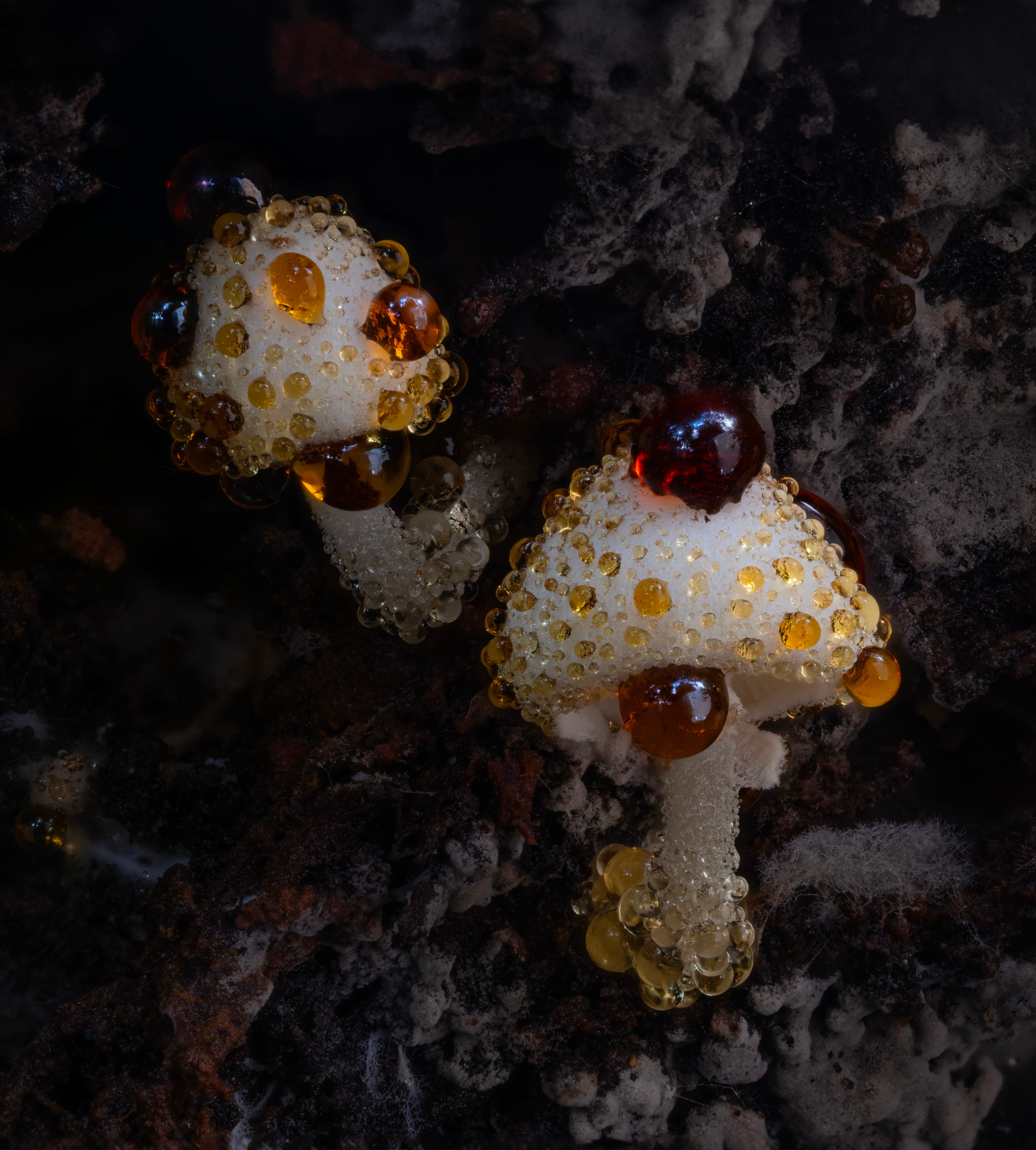
While I was preoccupied with my morbid curiosity, Paula found the most photogenic find of the day, a Candelolepiota sp. with amber and red guttation.
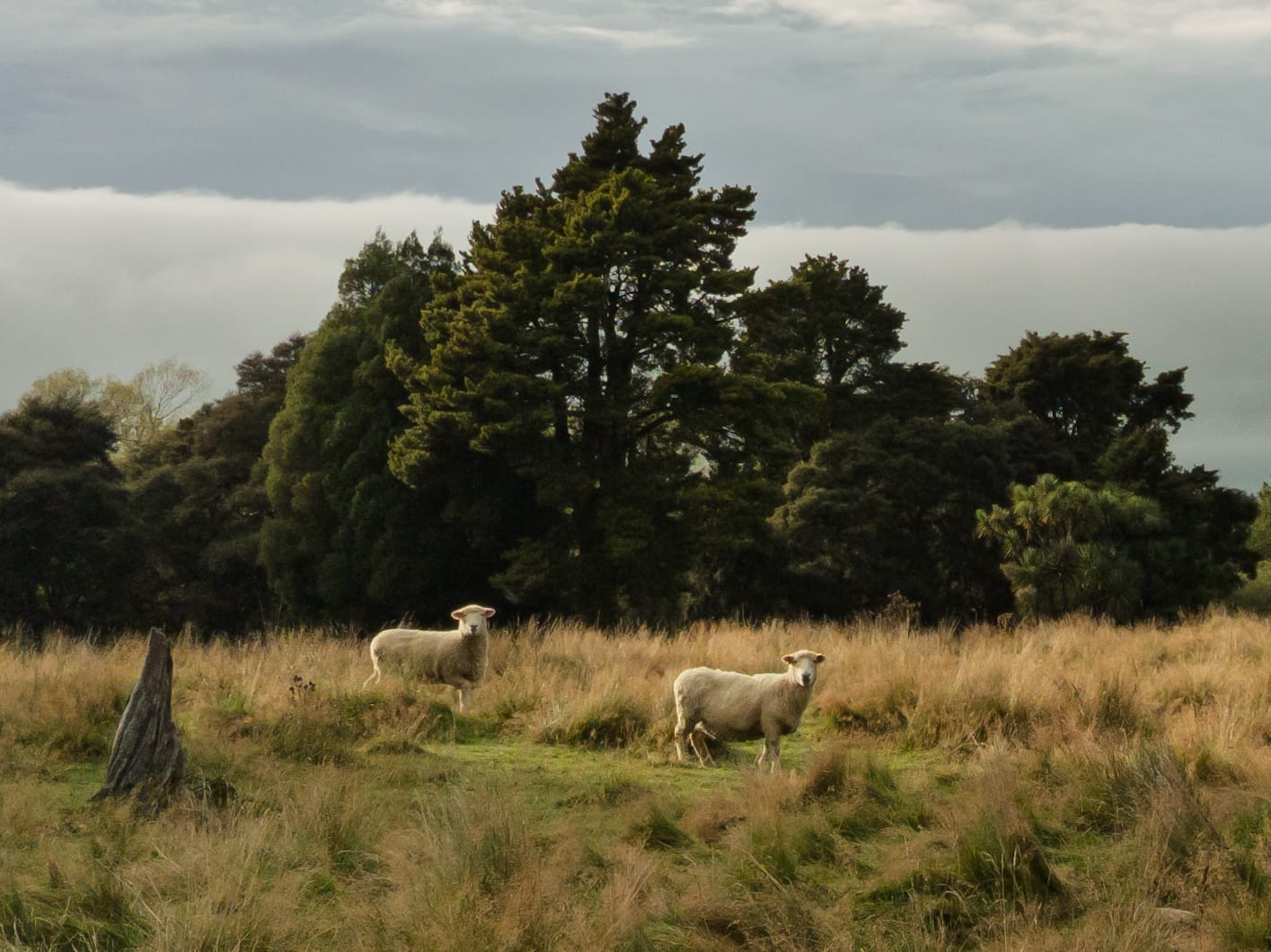
Kahikatea Walk at Peel Forest

At Peel Forest, the Kahikatea Walk passes through one of South Canterbury’s last pockets of lowland podocarp forest, where kahikatea once grew alongside tōtara and mataī.
I spent much of the rest of the week at the Kahikatea Walk, which sits right beside the DOC campground. To get there, I pass the sheep in the paddock, make sure to latch the gate behind me, and then head down into the white pine forest.
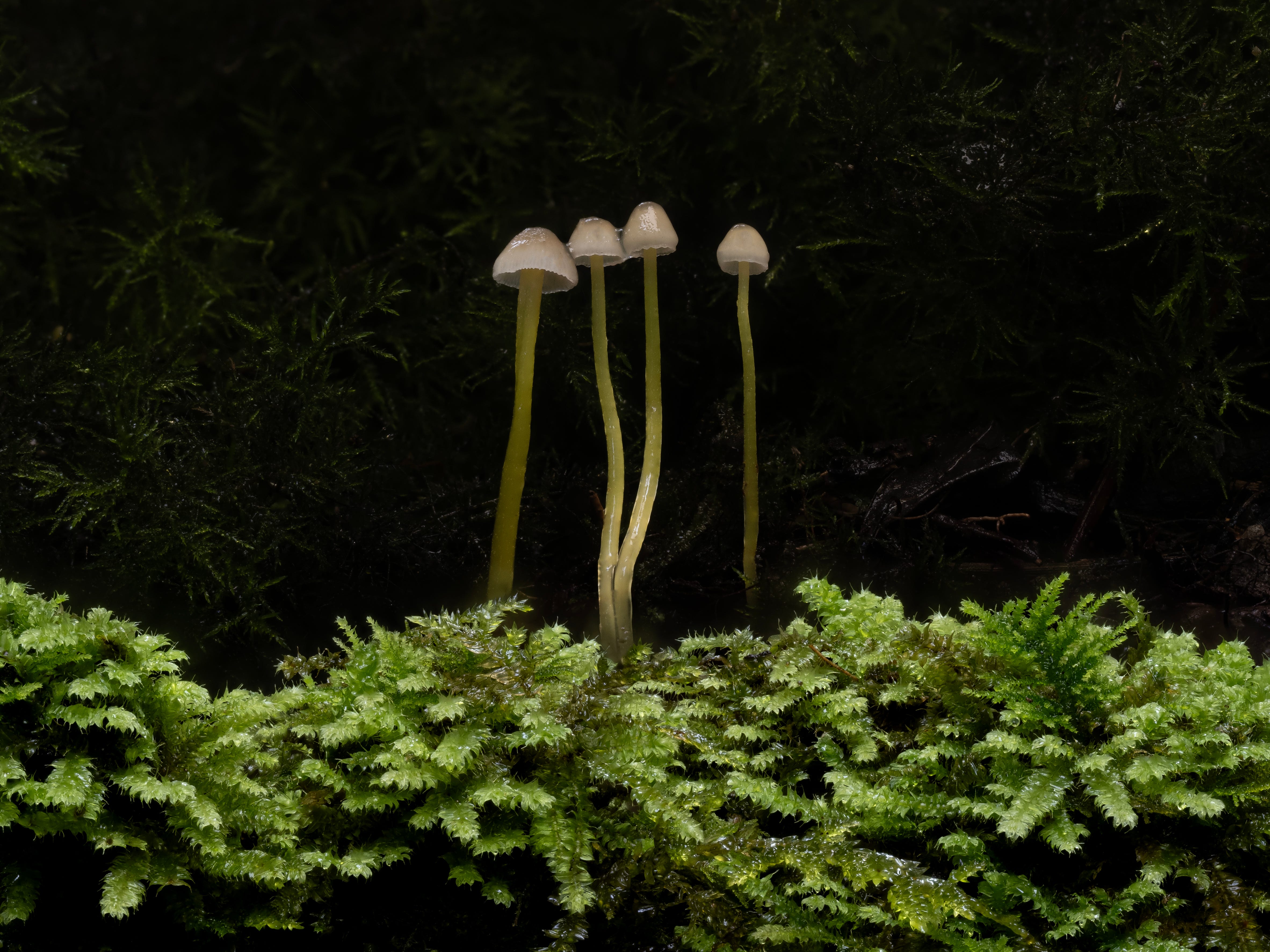
There’s lots of Mycena sect. Calodontes and other potentially bioluminescent species. One of the species I spotted was Armillaria novae-zelandiae, though its glow was extremely faint.


I also found a Cruentomycena viscidocruenta, the Ruby Bonnet, near the kitchen garden and photographed it at night under the cover of my awning. It was very faint, much like the last time I photographed this species, but the mycelium still gave off a visible glow.


Ruby Bonnets: A Glowing Discovery in Peel Forest

Cruentomycena viscidocruenta—try saying that three times fast without summoning something from the void. Most people stick to the easier name: Ruby Bonnet.
On the Kahikatea, yellows popped up from the moss and were only there for a moment as I couldn’t find them the next day.


Many bird’s nest fungus covered branches and logs.


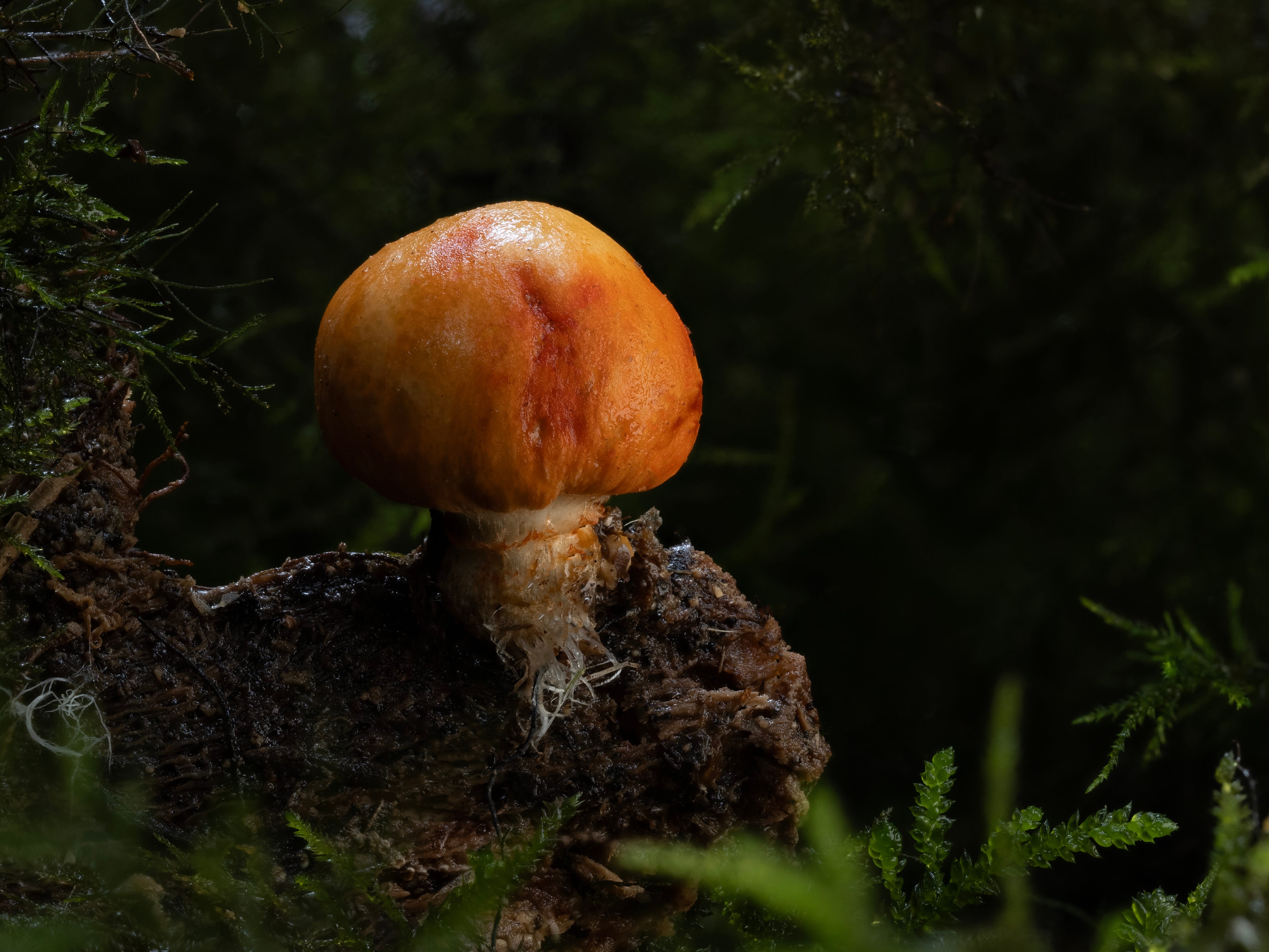
And the more common Scarlet Pouch Fungus (Leratiomyces erythrocephalus) tend to grow directly from rotting wood here.
Paula came back out a second time and we did a counter-clockwise loop of the Kahikatea Walk. This time we came across more scenes and species that were not especially colourful, but still had cool forms, textures, and character.
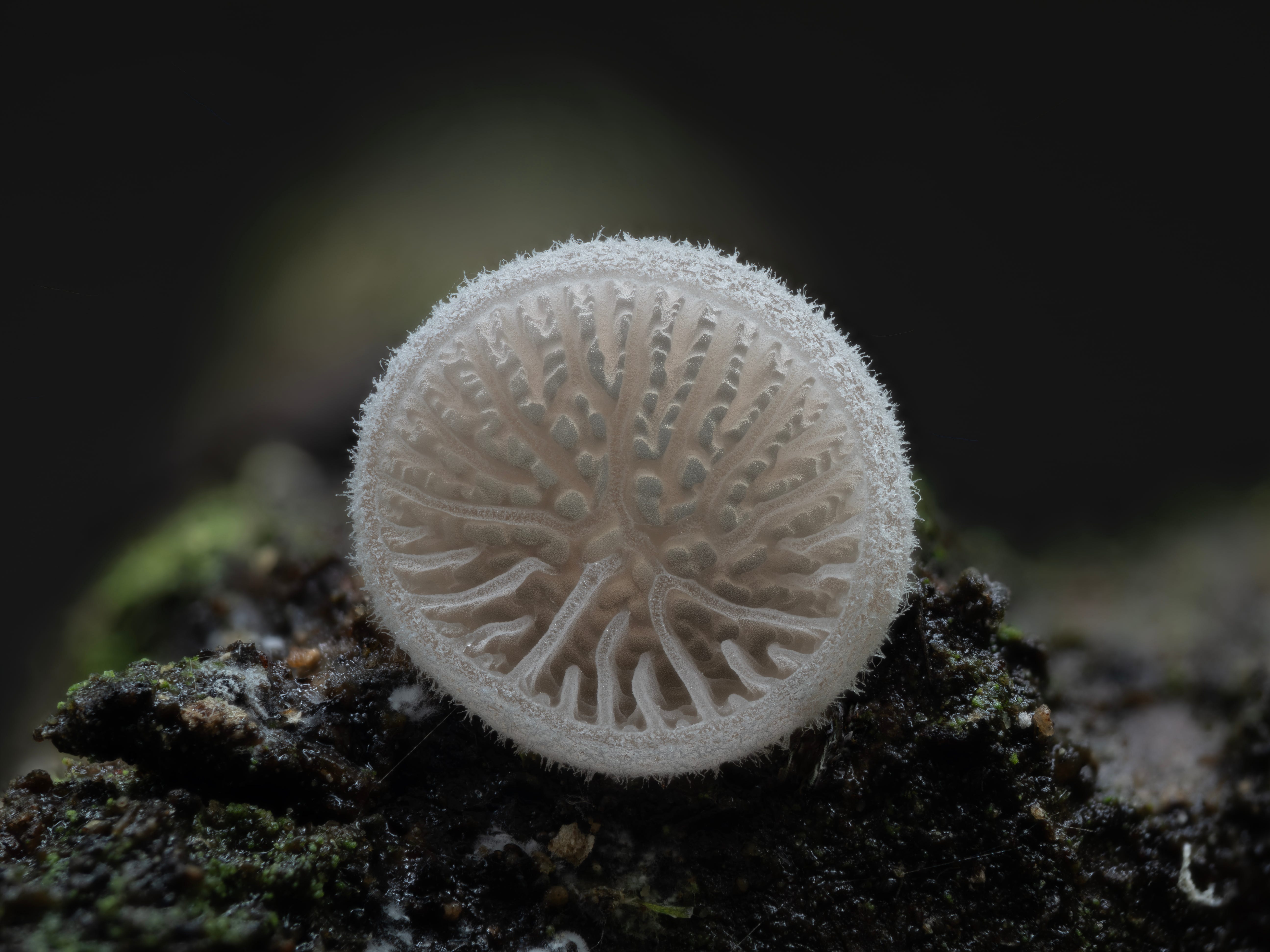
My favorite to shoot are the Resupinatus vinosolividus with anastomosing gills. The intricate patterning and the translucency make them very photogenic.


I also found Mycena mariae growing in the exact spot I found them last year. These are a kind of “bleeding Mycena” and exude a red blood-like liquid when cut. It looks like the mushroom is “bleeding,” but it’s really latex: a watery sap-like fluid stored in special cells.


Hunched over a pile of logs, I spot one of the smallest growths of the day - likely a Pruinomycena sp.


Another immature species, a young Pleuroflammula praestans that hasn’t opened up yet. These typically have serrated edge gills and flouresce a nice blue under UV light.


I say, “look at this sh*t” - what I suspect to be possum scat covered in Penicillium sp. These are really blue and powdery. The mould helps break down the poo as it has bits of partly digested plants, water, and nutrients - a type of coprophilous fungi.


Another favorite of mine are the tiny Phaeomarasmius ciliatus that I think took on a nice sheen from the rain.


Firerug Coprinellus are quite common. These group of inkcaps have a mycelial mat of red, orange that cover logs. The fruiting bodies emerge and appear brick red and fade to a more pale tan and cream color. The caps appear flocculose (covered in little pale, woolly or flaky specks).


One of the cooler scenes from the day were these two Mycena on a log and behind a bit of coniferous growth jutted out from behind with mycelium shooting out in all directions. A bit menacing and the overall scene reminded me of Frodo and Sam hiding out from the Nazgul.
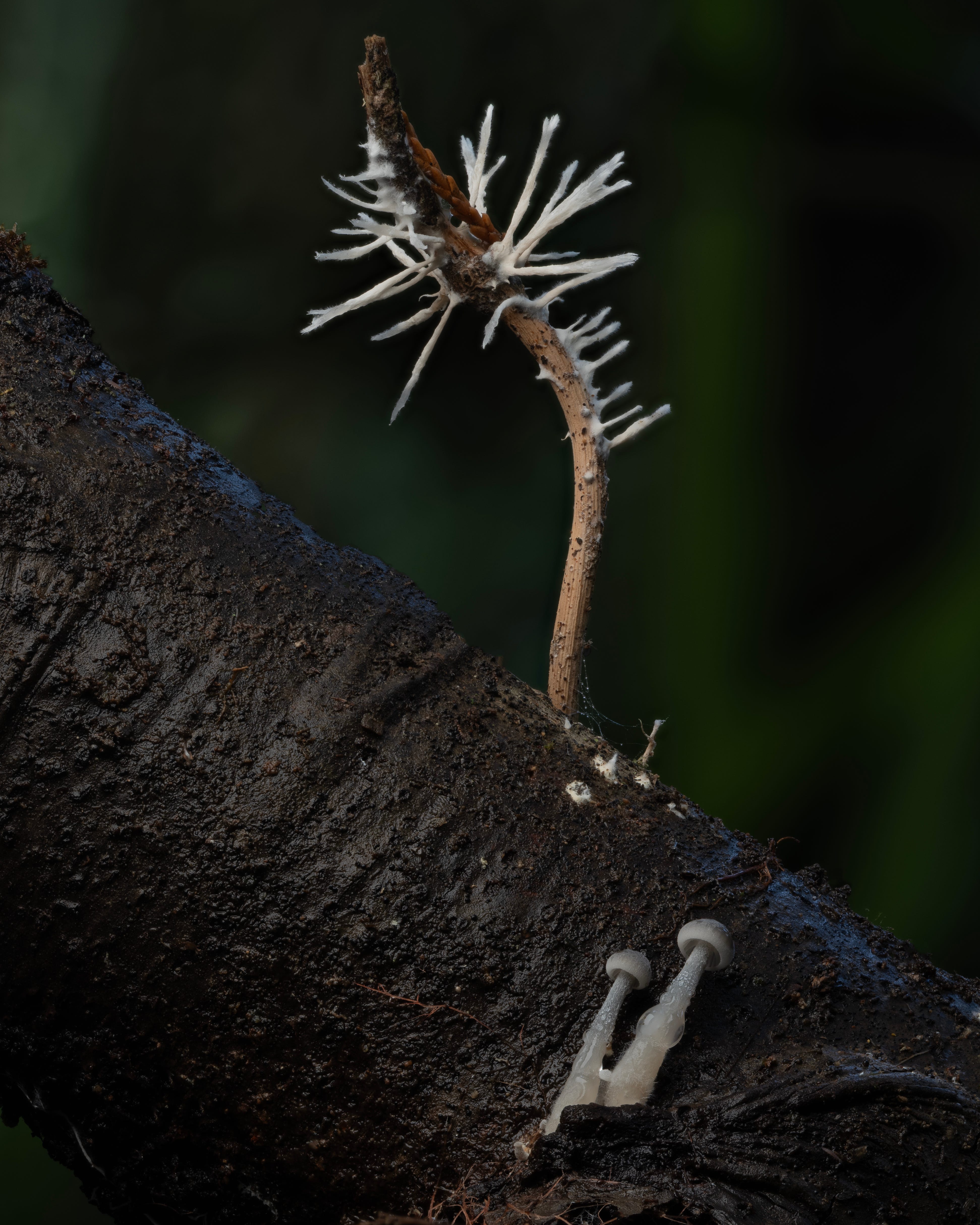
A closer look revealed even smaller ones growing.


My first enounter with a slime mold, Physarum viride. I’ve only ever spotted them before in Kuala Lumpur.


And more slime molds were spotted.


As part of a larger project for a photography course I’m taking, I’m changing the way I shoot and have been focusing more on scenes and “microscapes” of forest floor organisms that also include moss, lichens, and slime molds.
For now, select images for Microscapes of New Zealand will be viewable below for paid subscribers.