


To cap off 2025, I spent a day back in Marahau. A place I know very well. In 2019, when I first moved to New Zealand, I used to live up the road in a cottage just outside Abel Tasman national park for half the year. Six years later and I’m back to where a lot of things began for me, including my introduction to fungi and the obsession of documenting whatever I stumbled across.

It felt different this time. Busier. I didn’t have the park to myself like I sometimes did in winter. Instead, I made my way through traffic, keeping an eye out for pedestrians, and tried to find a place to park near the entrance. The secret’s definitely out.
The sun was intense, so I took cover along the coastal track. Every bend resurfaced old memories like little flashes of the first time I found a certain species, or a specific patch of understory that had once kept me crawling around for hours.
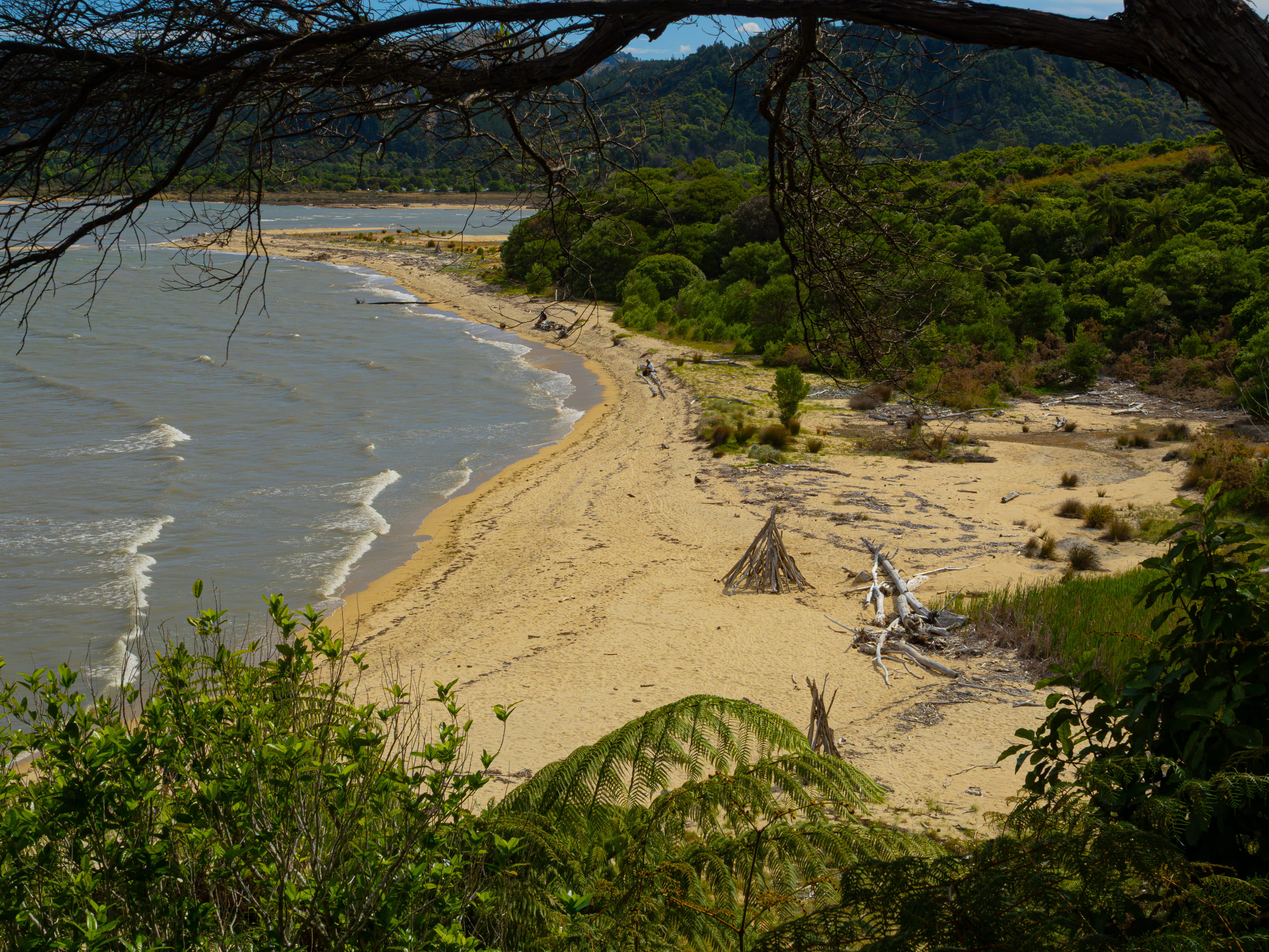
There are a few spots along the track where you can peek out and look over the bay. The views hit like a cool breeze.
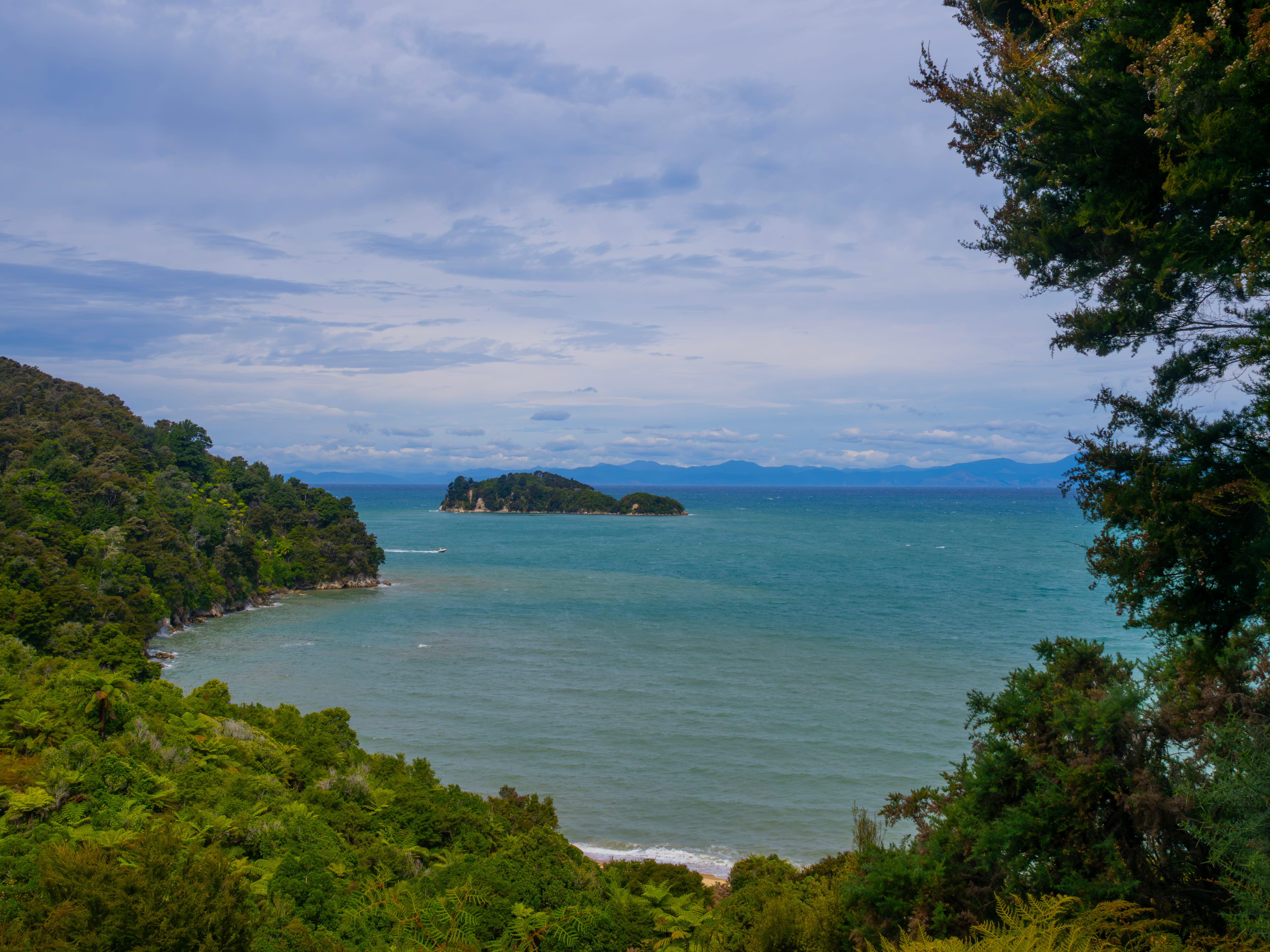
It was low tide, and out on the exposed sand the ripples were dotted with cockles. Variable oystercatchers worked the shoreline, and weka moved with authority.
I made it to Tinline, a short loop I’d comb obsessively. This time the ground was crunch-dry, and the payoff was minimal: two big finds and not much else. A Train Wrecker (Neolentinus lepideus) protruding from a stump, and a huge pūtawa punk (Laetiporus portentosus).


Neolentinus lepideus (the “train wrecker” or scaly sawgill) is a tough, scaly-capped, white-spored gilled fungus with distinctly serrated gill edges that decomposes dead wood (especially conifer timber) and sometimes shows up on treated lumber like old railway sleepers or ties, which is where the “train wrecker” nickname comes from.


Laetiporus portentosus is known to Māori as pūtawa or pangu, while European settlers (Pākehā) called it “beech whiskers,” “beech beard,” “morepork bread,” or simply “punk,” a general term for dried Polyporus fungi used as tinder. It was so effective that it was sent with flint stones to NZ troops in both World Wars to help light cigarettes and pipes.
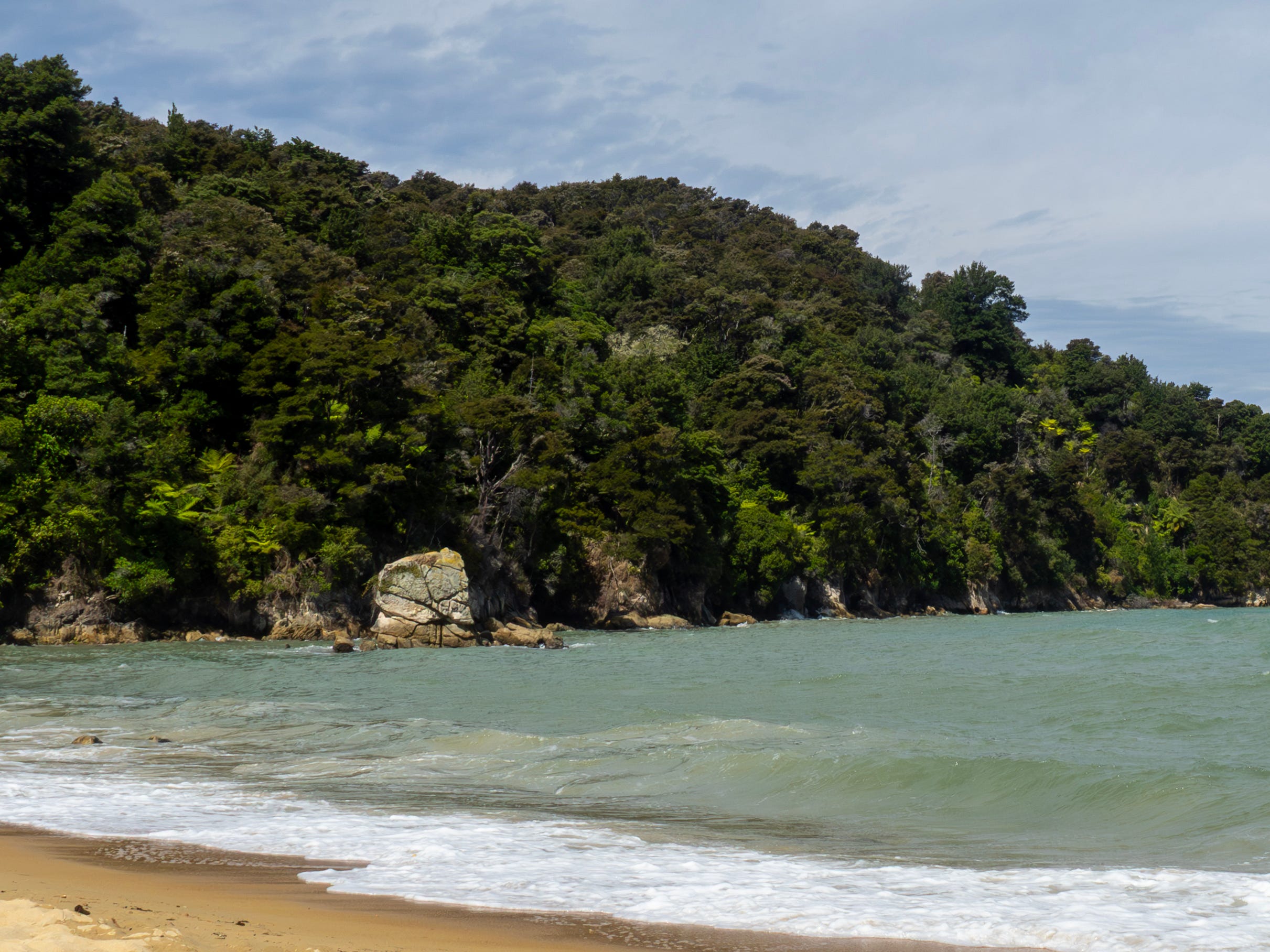
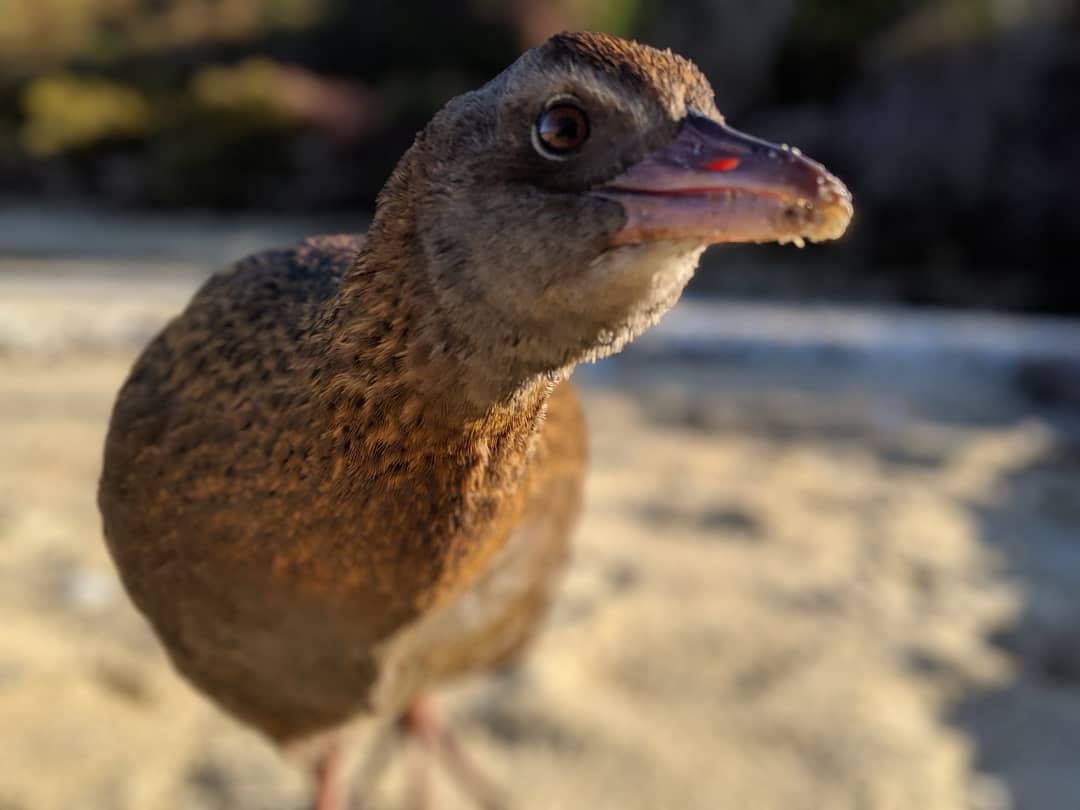
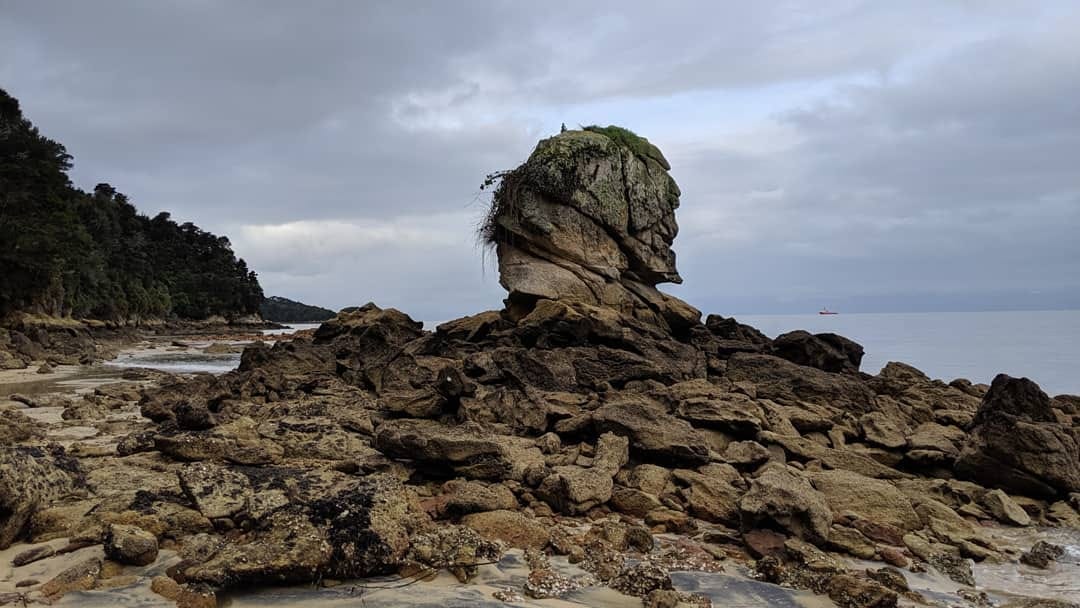
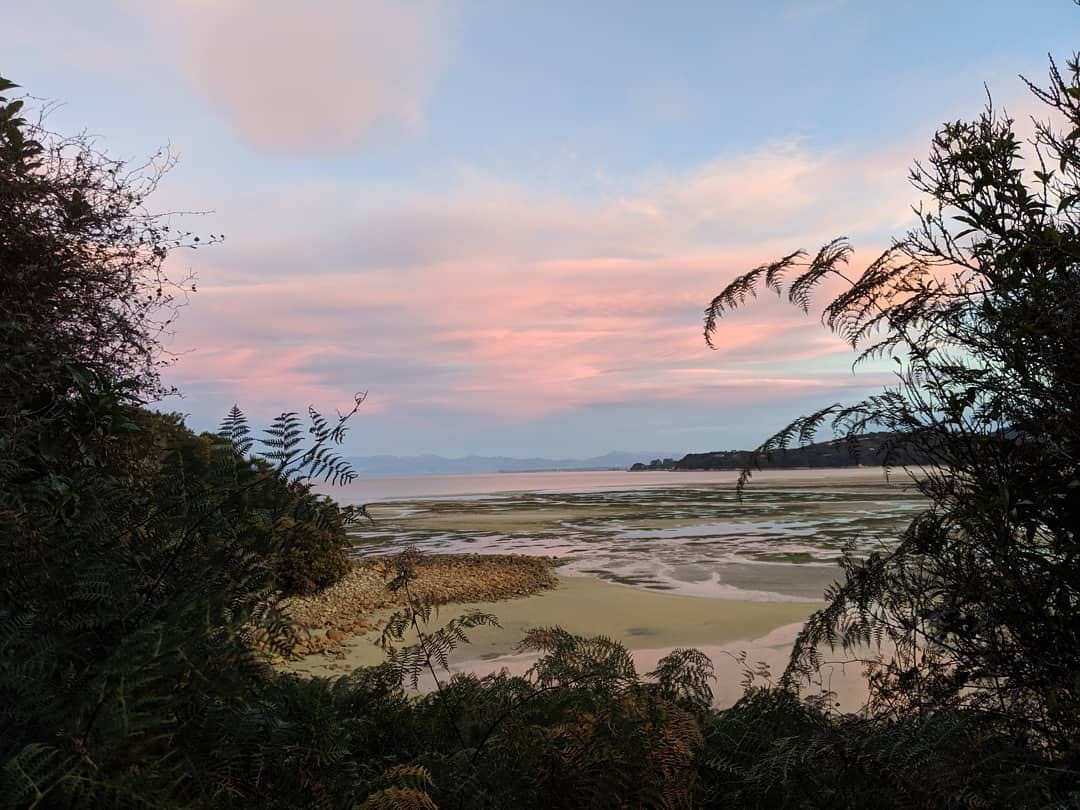
I reached Coquille Bay and took a break on driftwood, watching the tide roll back in. The Sphinx rock was already half swallowed with the body gone, just the head left above the water. I remembered surfcasting here, pulling in kahawai, and watching the sky set into purple-pink evenings that seem to last longer in memory.
I’d like to come back in winter. I’ve travelled and lived in a lot of places, and this stretch of coast is still one of my favourites.
Very well written and interesting. Was the water warm there? It is freezing in the US. Kenny
I love that part of the world. Those Wecka are adorable!