


Fungi have long occupied a strange space between the familiar and the mysterious. They appear in forests, kitchens, folklore, medicine, art, design, and popular culture, yet much of the fungal kingdom remains unknown to us.
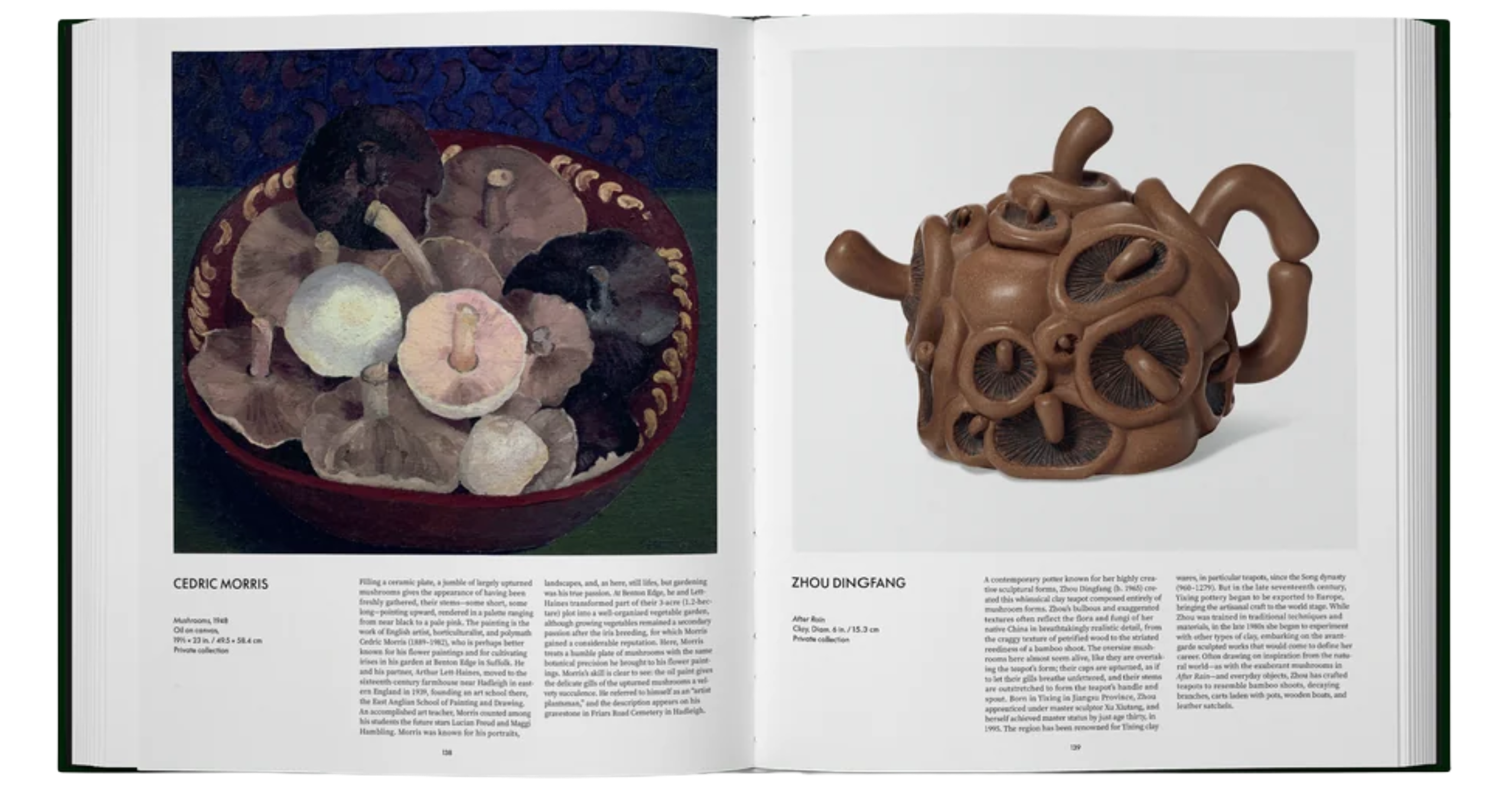
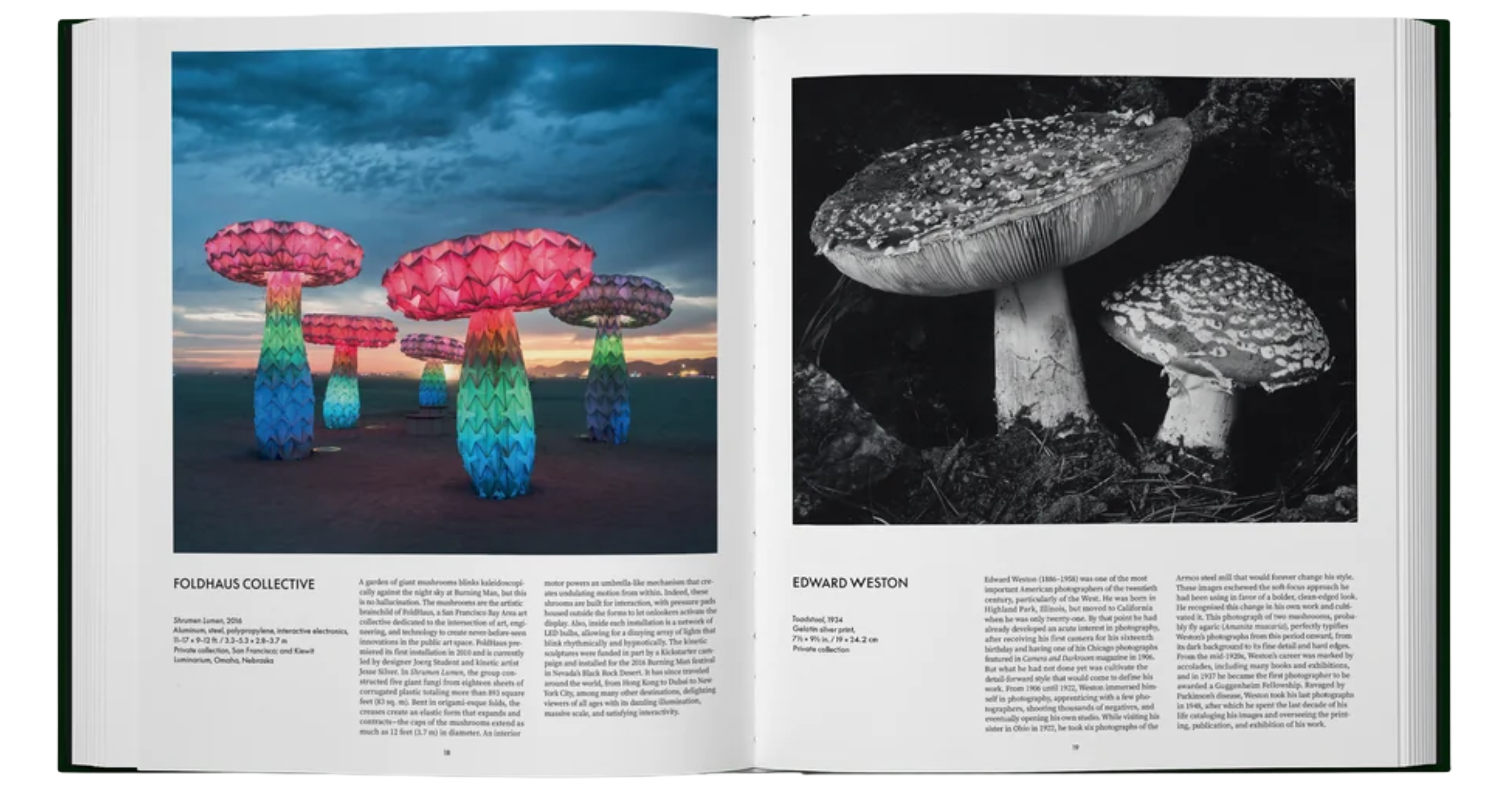
Phaidon’s forthcoming Fungi: The World of Mushrooms, out in October 2026, approaches that world visually, bringing together more than 200 images spanning over 6,000 years across art, science, history, and culture.
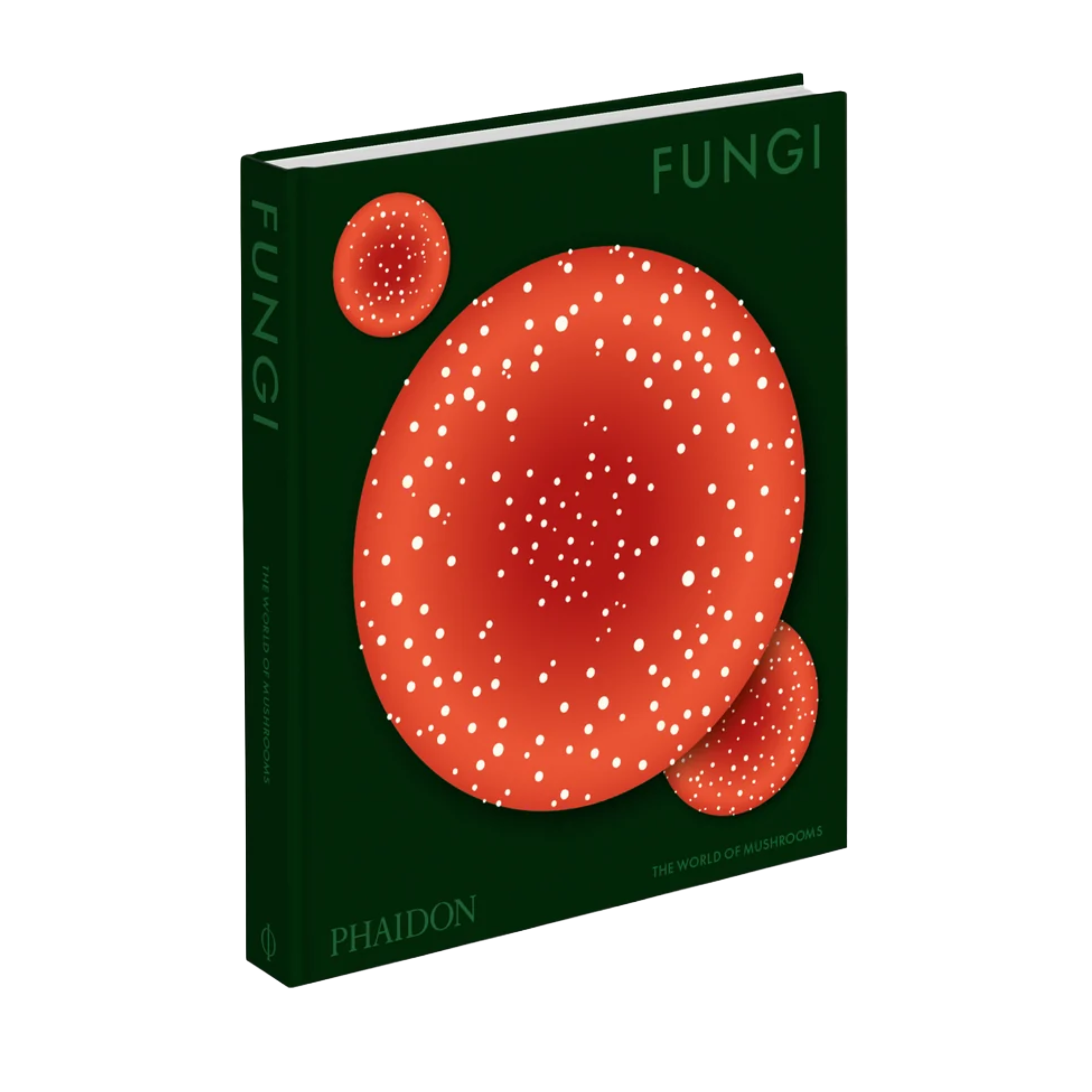
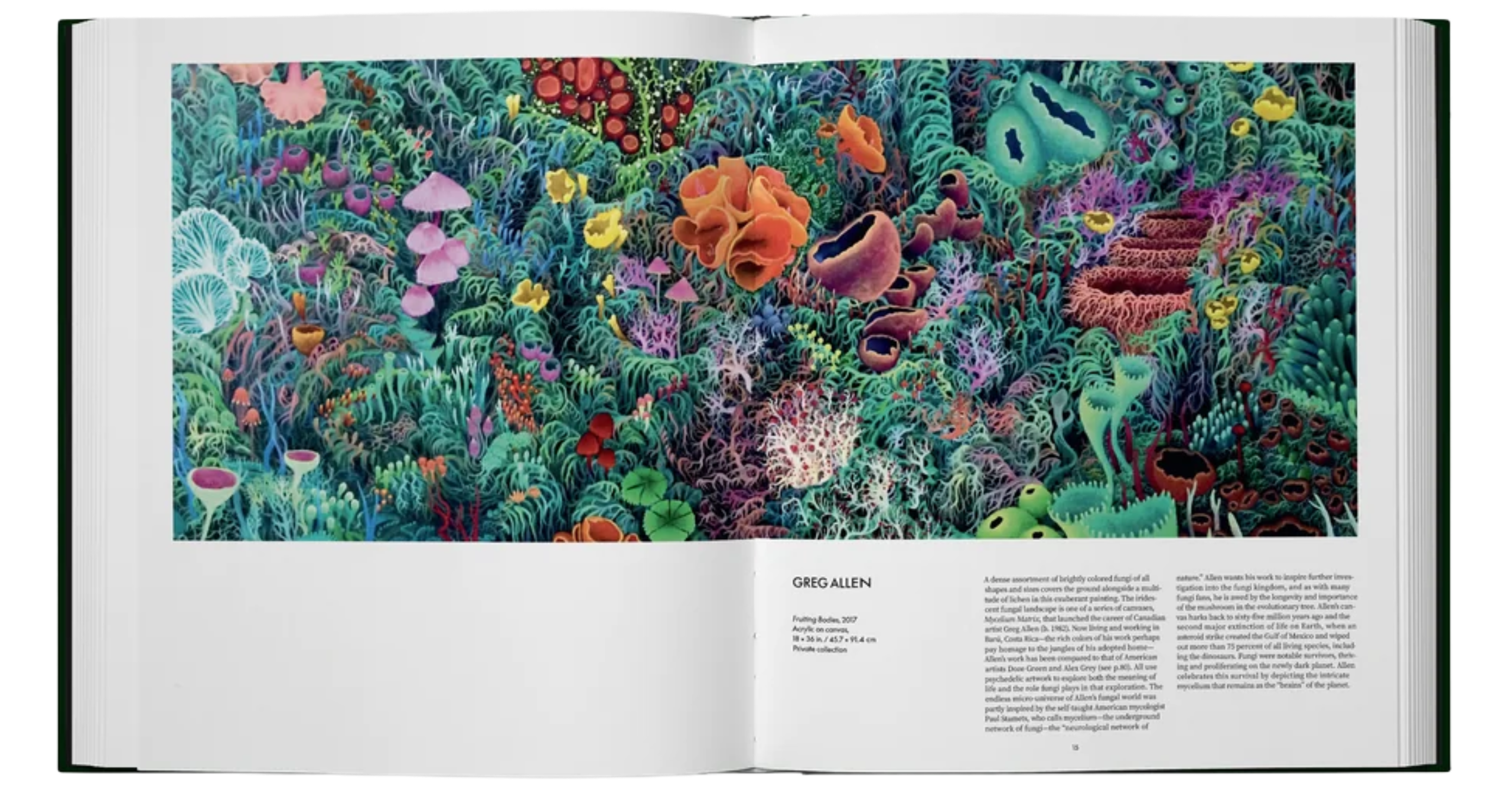
The book ranges widely in both subject and medium, from botanical illustration and macrophotography to jewellery, textiles, film, and living installations. Its contributors and expert panel bring together perspectives from mycology, art, horticulture, and visual culture, creating a portrait of fungi that is as cultural as it is biological.
The foreword is written by Francesca Gavin, an author, curator, and editor whose work has long explored the intersection of contemporary art and culture.
Gavin is Editor in Chief of EPOCH Review, Director of Visual Arts at Murmur, and has curated three exhibitions focused on mushrooms in contemporary art and design, including exhibitions at Somerset House in London and Fundação de Serralves in Porto.
Ahead of the book’s release, I spoke with Francesca about her relationship with fungi, the visual world assembled in Fungi, and what our enduring fascination with mushrooms might say about us.
You’ve explored mushrooms across several exhibitions now. What first drew you to fungi, and has that fascination changed over time?
Artworks came first. I became aware of contemporary artists increasingly using mushrooms as a topic in their work and I wanted to know why. I read The Mushroom at the End of the World by Anna Tsing in 2015 and was fascinated by the position of the organic in relation to the structures of capitalism. My first mushroom show - Champignons at galeriepcp - was in 2017. I was definitely ahead of the current fungi curve!
Why do you think fungi feel so culturally present right now? Is this really a new fungal moment, or part of a much older fascination?
I think humanity is deeply in need of metaphors to help us make sense of our existence. Whether that is the context of ecosystems or politics or technology or psychology. Our need to work together with nature - that the universe is not anthropocentric we are actually deeply intertwined with the world around us.
Our relationship to fungi culturally I think is transforming dramatically. In Western culture, it was only really since the 18th century with the rise of amateur botany that fungi became something more interesting to the public - and only since the children’s books of the 19th century that mushrooms are seen as something playful rather than a symbol of rot and decay. The interest in mushrooms now is very reflective of contemporary science, economics and revival of the psychedelic.
The book brings together art, science, design, and popular culture across thousands of years. What happens when those different ways of seeing fungi are placed side by side?
What is so incredible is how varied and beautiful fungi are as a subject! It is fascinating to see the breadth of representation and ideas something so small can inspire. I love reference books that balance information with beauty and think this book does an incredible job doing just that.
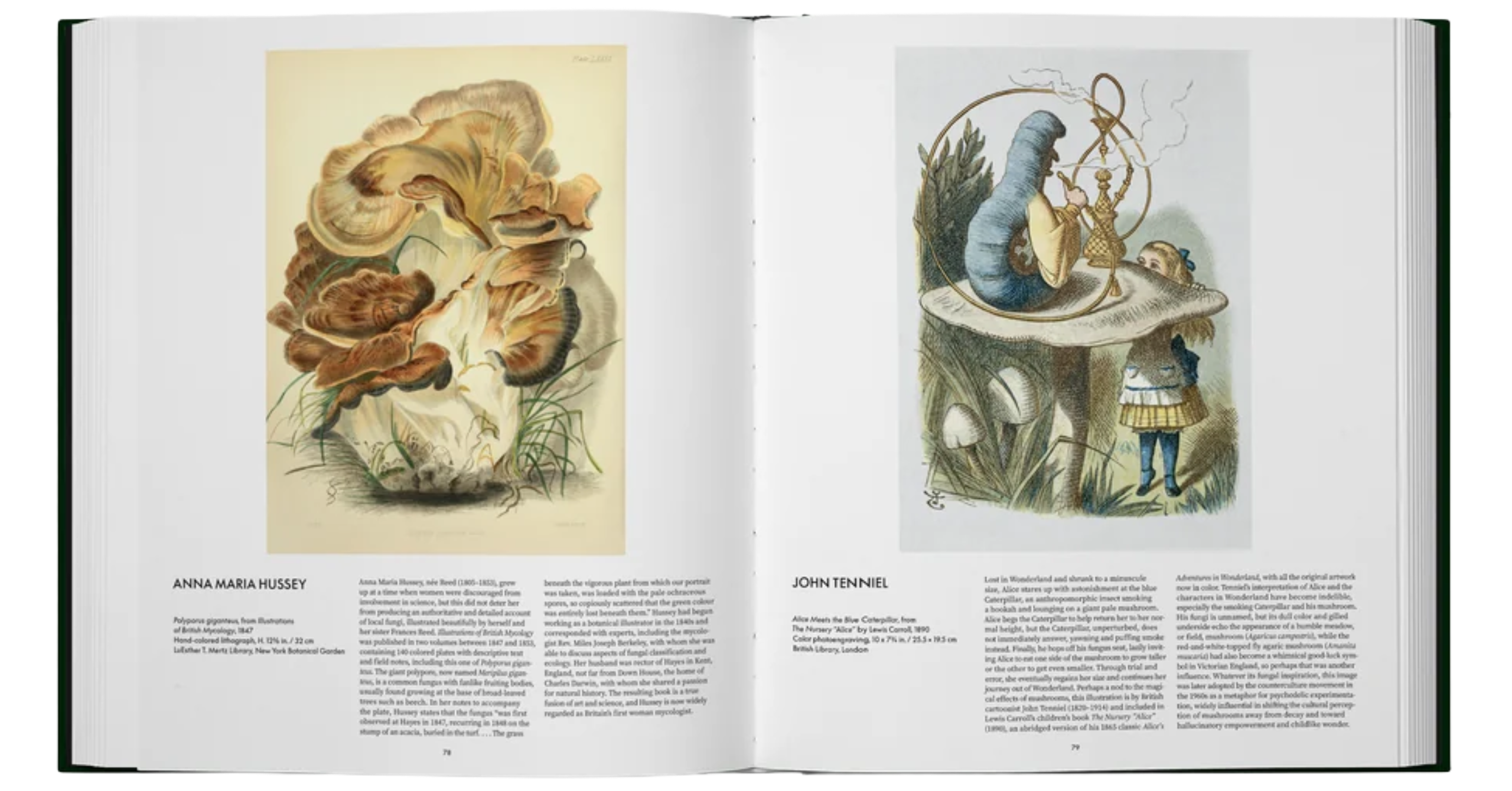
The book brings together botanical illustration and the work of pioneering mycologists with contemporary artists, fashion, and popular culture. Historically, where do you see the boundary between observing fungi scientifically and representing them artistically?
There is a level of detail and function that makes botanical illustration so interesting - these are visuals that are trying to make sense of the world. Artworks have a different motivation I think: to make us feel something. They enable us to see the world in a different way - through the eyes of the artist.
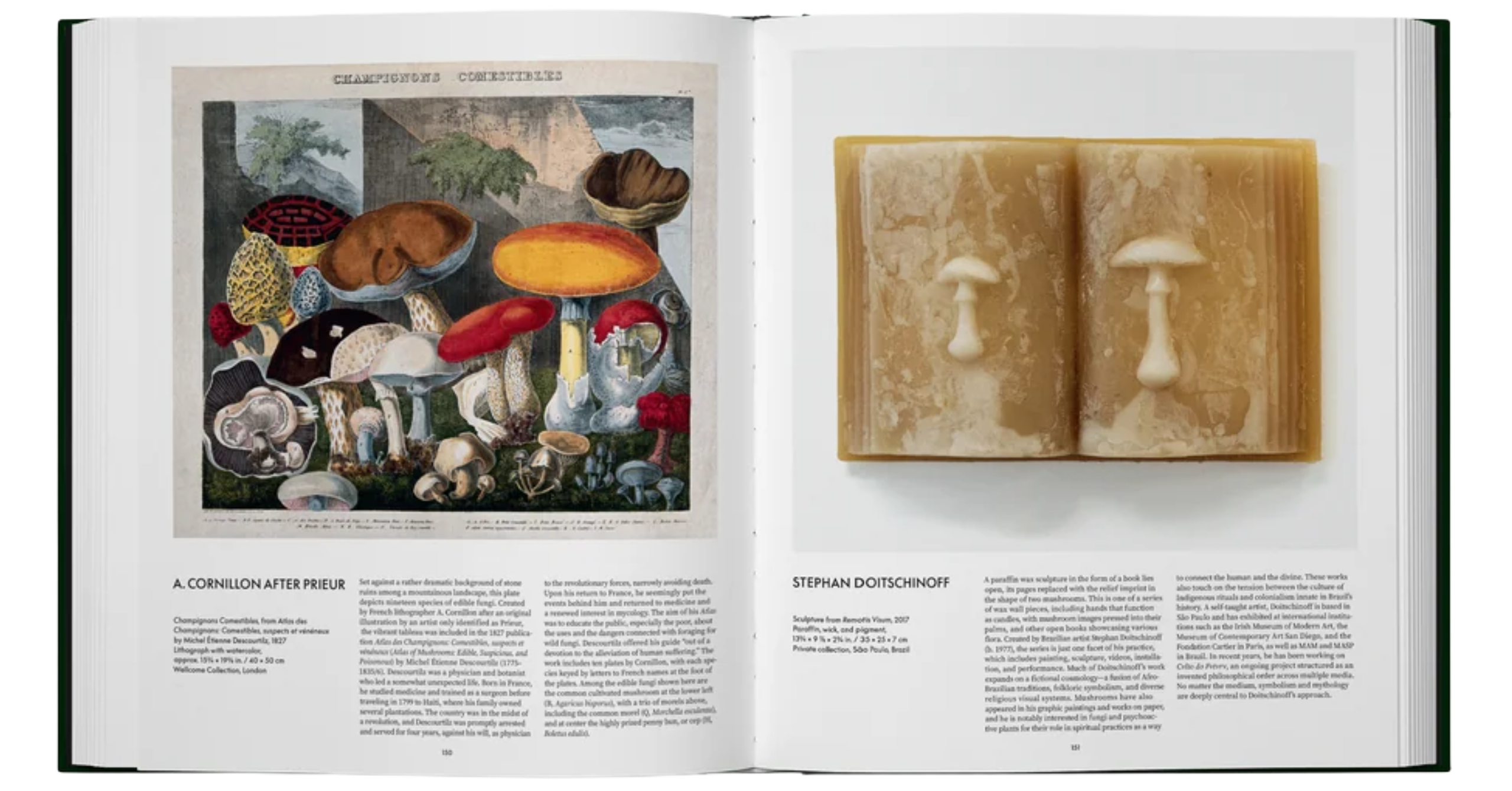
Much of a fungus exists beyond what we ordinarily see (underground, inside other organisms, or at microscopic scales). For a book so concerned with visual culture, how do you represent something whose most consequential life is often invisible?
It is such an interesting paradox isn’t it. I suppose this is one of the great issues in contemporary art - how do you represent the conceptual? The artworks that may resonate in print maybe different to the ones unpicking the concept of mycelium in a wider sense. I think the best art works inspire an audience to search for something more - to unpick what is beneath the image itself. To learn about the artist, the context, the science, the philosophy of something.
Were there any pairings or images in the book that genuinely surprised you or changed how you saw the subject?
I admit after curating three exhibitions on the topic I was very well versed in mushroom imagery! However it is always amazing to discover new pieces - some of the early Asian scroll works are deeply inspiring. China and Japan have a very different history and connection to fungi than in Europe, for example. I think that difference comes across.
The familiar red-and-white toadstool has become almost a shorthand for “mushroom” in visual culture, and it appears prominently on the cover. Why has that particular image proved so enduring when the fungal kingdom is vastly stranger and more diverse than that single form?
The history of the fly agaric is so interesting. First discussed in an 18th century book on Siberian shamanism they really became mushroom ‘shorthand’ after appearing in illustrations in Victorian children’s books. This echoes the rise of books themselves as a popular cultural form. I think they are so easy to portray perhaps compared to some of the smaller and more complex fungal forms! Everyone loves a polka dot? The extreme psychedelic nature of Amanita I think is another reason they have resonated culturally. They sit on the line of attraction and poison, desire and fear.
We often use fungi as metaphors for connection, collaboration, decay, and renewal. Do you think we sometimes project too much of ourselves onto them?
Completely. They demonstrate the idea of thinking beyond the human and can work out the shortest way to reach a food source along a maze. Mycelium also contains its own history in their physical form - as it grows in different directions. I think fungi highlight that we are not as special as a species as we think we are. We cannot exist without nature. In the context of climate crisis we are in, fungi reinforce the need for dramatically rethinking how we see the natural world.
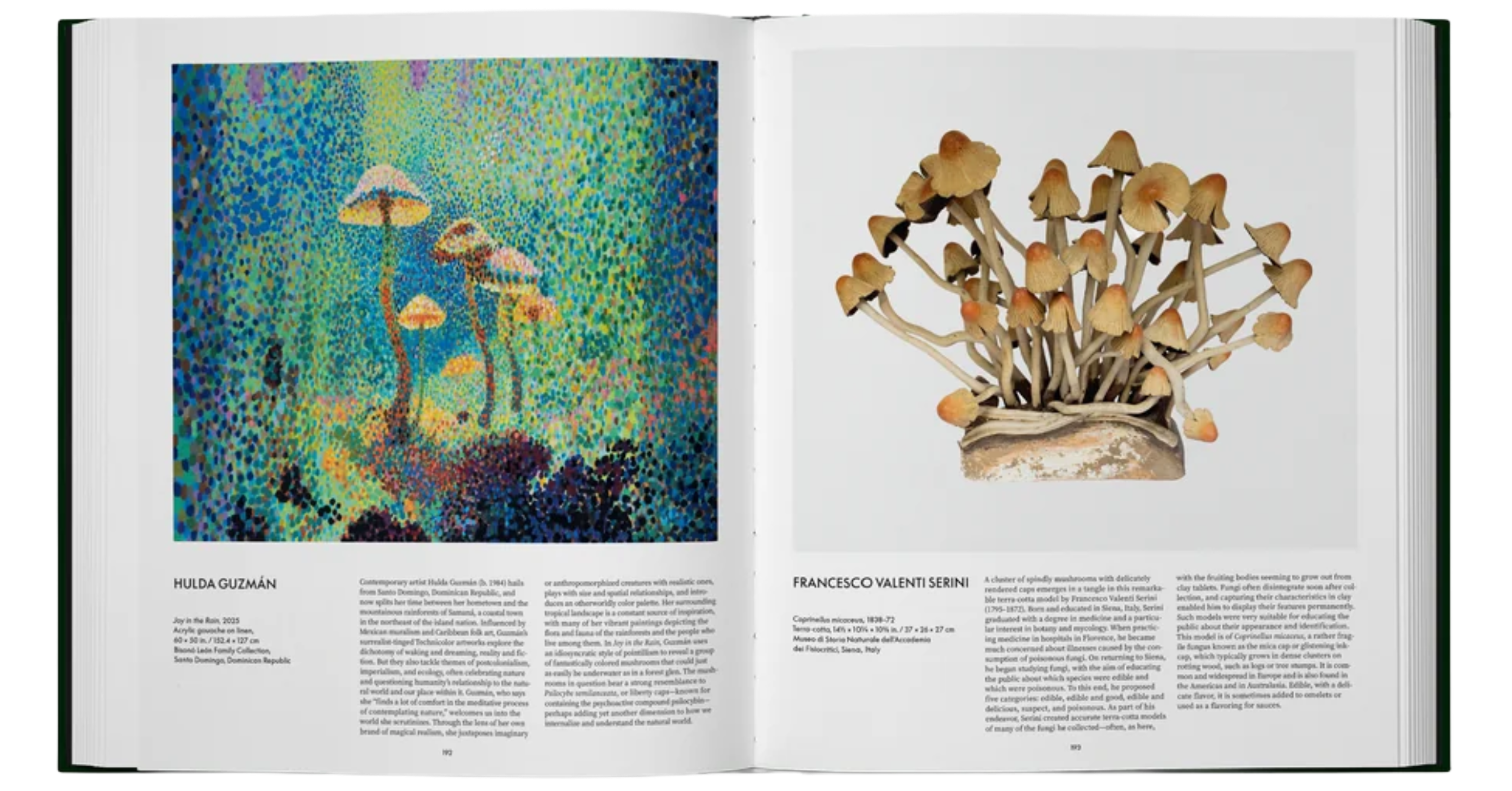
Fungi: The World of Mushrooms is published by Phaidon in October 2026. Across 232 pages and more than 200 images, the book brings together centuries of artistic, scientific, and cultural responses to one of the natural world’s most distinctive kingdoms.
What emerges is less a single story of fungi than a record of the many ways people have tried to observe, understand, use, and imagine them. For a subject that so often resists easy classification, that breadth feels appropriate: fungi continue to sit somewhere between organism and symbol, scientific subject and cultural object, the everyday and the uncanny.