


Physically tired but buzzing with excitement at what I’d just witnessed the day before, I was eager to start the day.
The plan was to explore the eastern part of the park, following the Mempening Trail. The night before, I had dreamed about the upcoming day's adventures, yet I soon discovered that reality would far surpass my expectations.

I feel the cool morning air. This time, I wore long socks, tucking in my pants to create a barrier against the bloodthirsty leeches that inch the underbrush.
I encounter a French family on the trail: a couple and their young daughter. As we share the wonder of tiny mushrooms magnified on my camera screen, I notice—and point out—tiny leeches crawling stealthily on their shoes.
The family was initially unaware of their uninvited guests — the dawning of such unwelcome hitchhikers often comes as a rude awakening. And in the case of leeches, ignorance is hardly bliss.
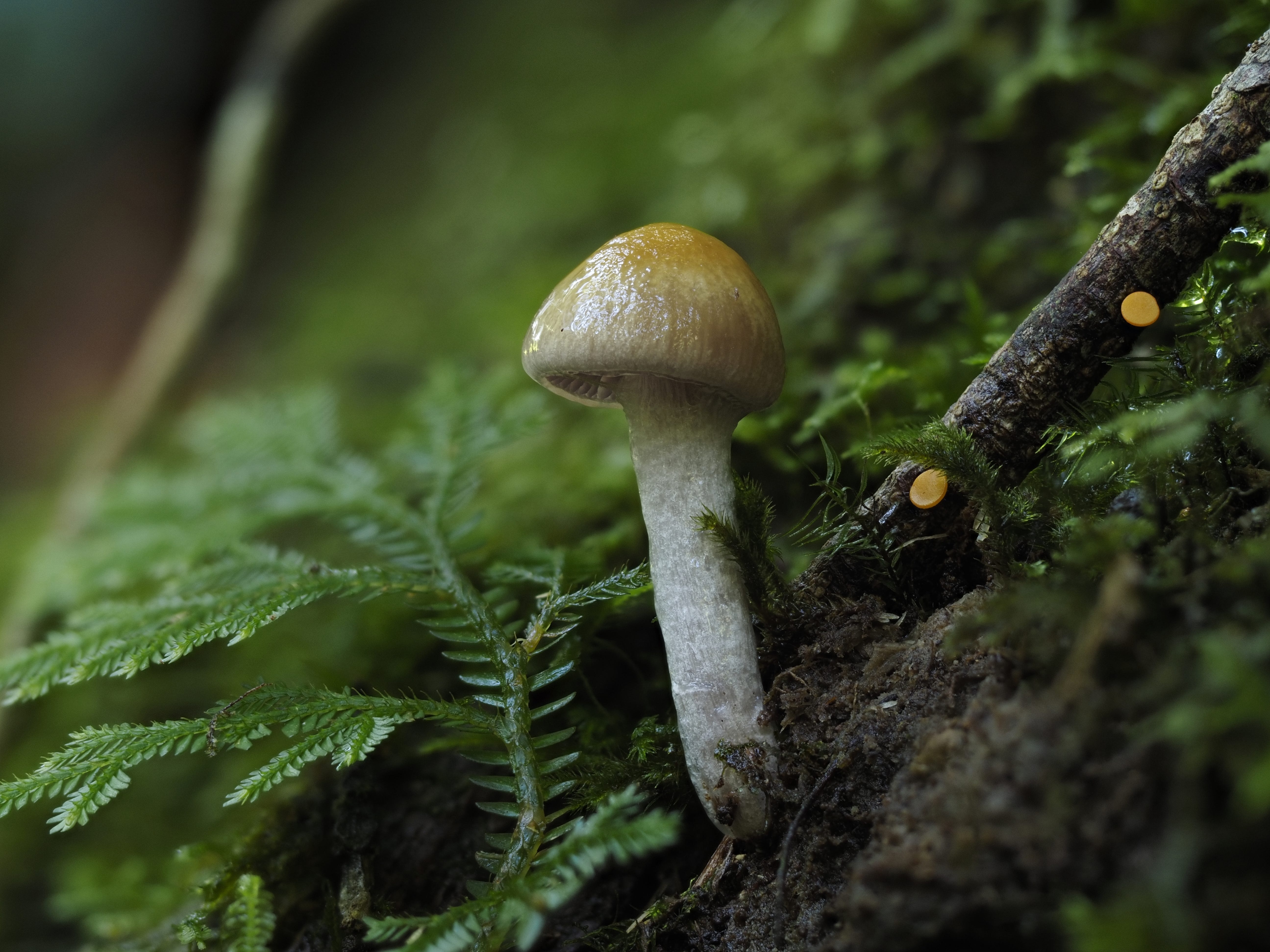
I enter the Mempening forest trail, and sunlight dapples through the canopy. The rays are defined by the morning mist that hangs in the air.
A huge tree is splintered at the base, with the trunk lying across the track, blocking my way. I’m able to duck and climb my way through, but this would be an early sign of more freshly fallen trees I would later encounter.
Rounding a bend, I spot a pink tongue sticking out at me. I laugh in disbelief. I’ve only seen them in photos online, but to find one here is truly rare. I only know of a couple of records made before in Borneo. But this is the first record in Kinabalu: the Beefsteak Fungus or Fistulina sp.


They’re called beefsteak mushrooms (also ox tongue, poor man’s steak, and tongue mushroom) because they resemble raw beef when cut.
Underneath are tiny tubules that even excrete a red liquid that looks like blood.
The genus name is a diminutive of the Latin word fistula and means "small tube," and the type species name hepatica means "liver-like,” referring to the consistency of the flesh.
I spend some time admiring how weird this growth is and then continue on my way.
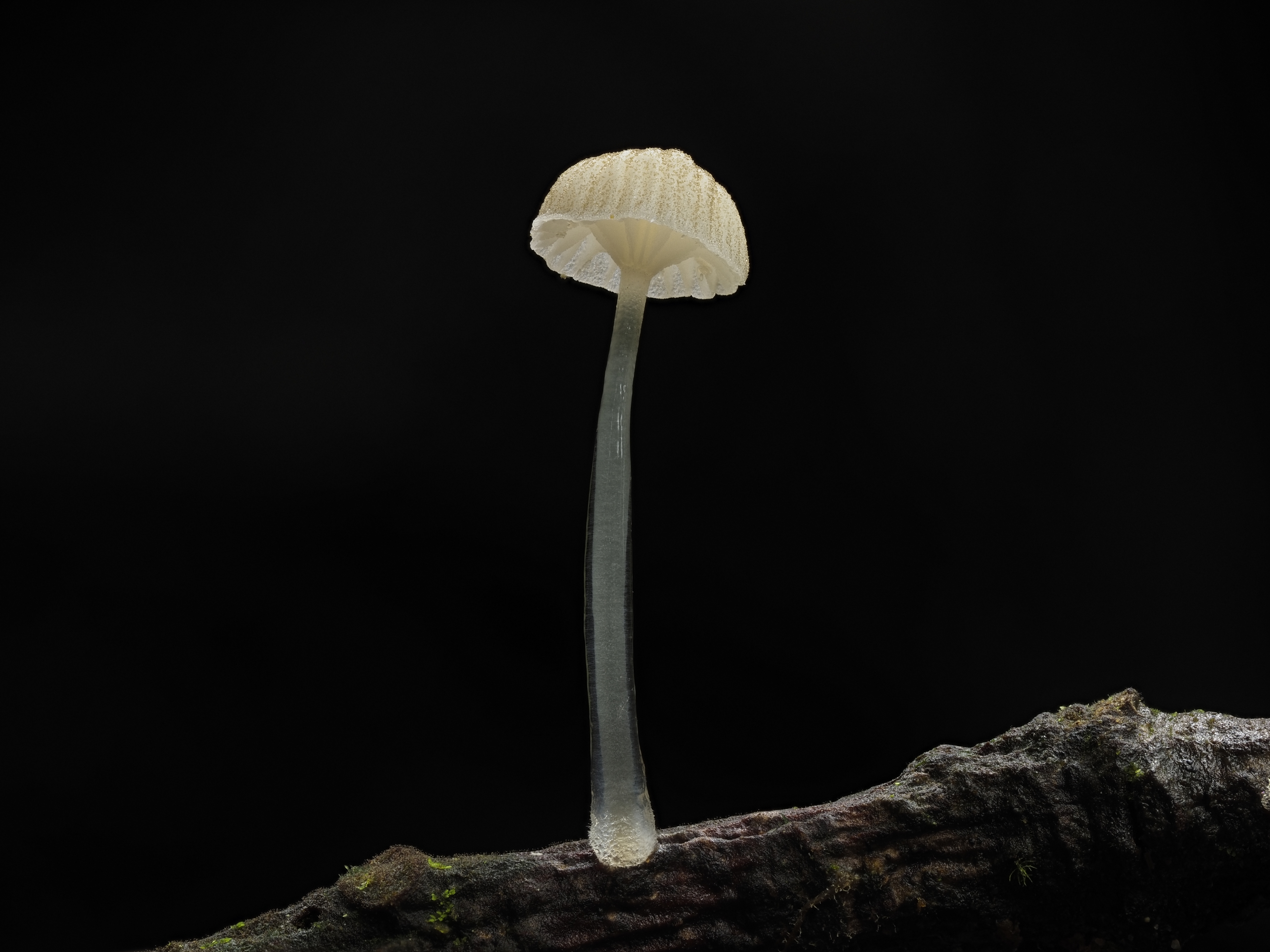
This time out, I’d find a couple of bioluminescent species (a special caramel-colored Roridomyces and a tiny pored mauve Mycenaceae on a leaf that I dub a Lilac Lantern), which I cover more in-depth here:

The trail leads up, and I step into deep grooves in the clay as if a giant had walked here before me. Drenched in sweat and enveloped by the humid air, I find myself merged, floating through the forest’s exhalation—unfazed and removed from my body—a blissful meditation equivalent to a runner’s high.
Suddenly, my path vanishes behind a barricade of branches, leaves, and massive, splintered tree trunks—four in total—that have recently fallen, completely blocking the path.
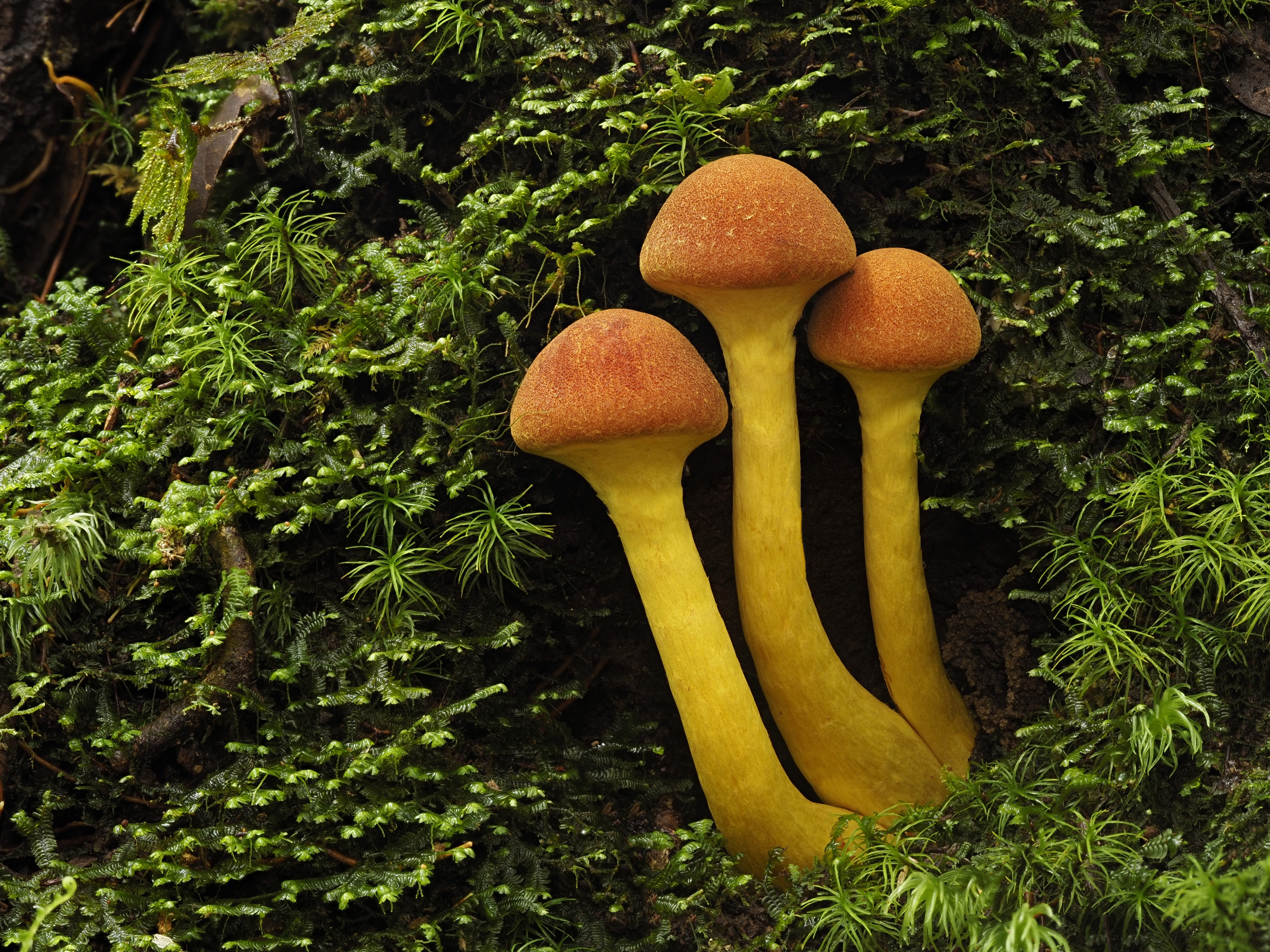
Attempts at trying to go around lead to more precarious situations that seem steep and stupid, so I decide to go over and under. Climbing through slowly and methodically, I finally end up on the other side and am immediately rewarded with a trio of bright yellow and orange Cortinarius poking out at the base of a tree.


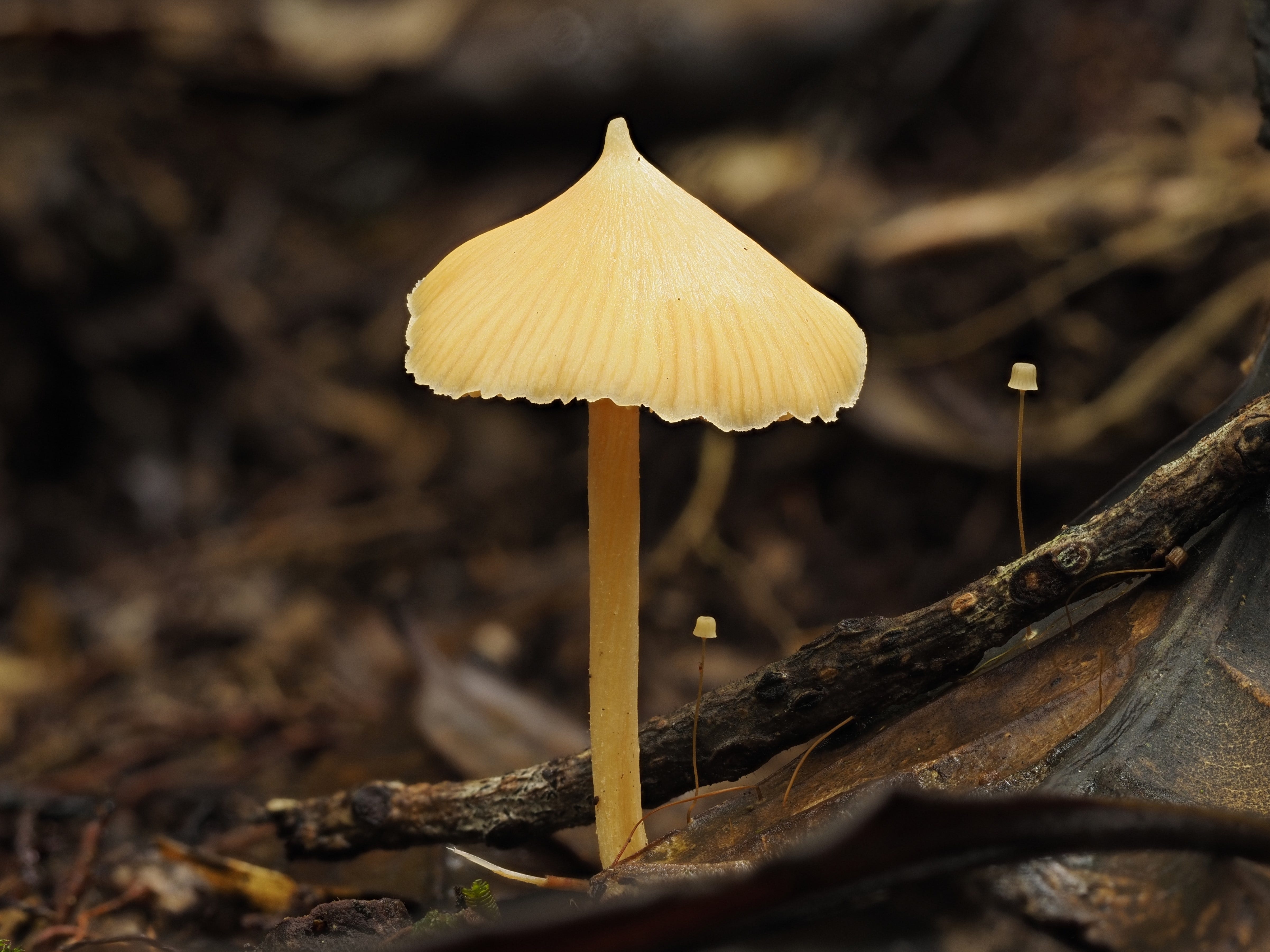


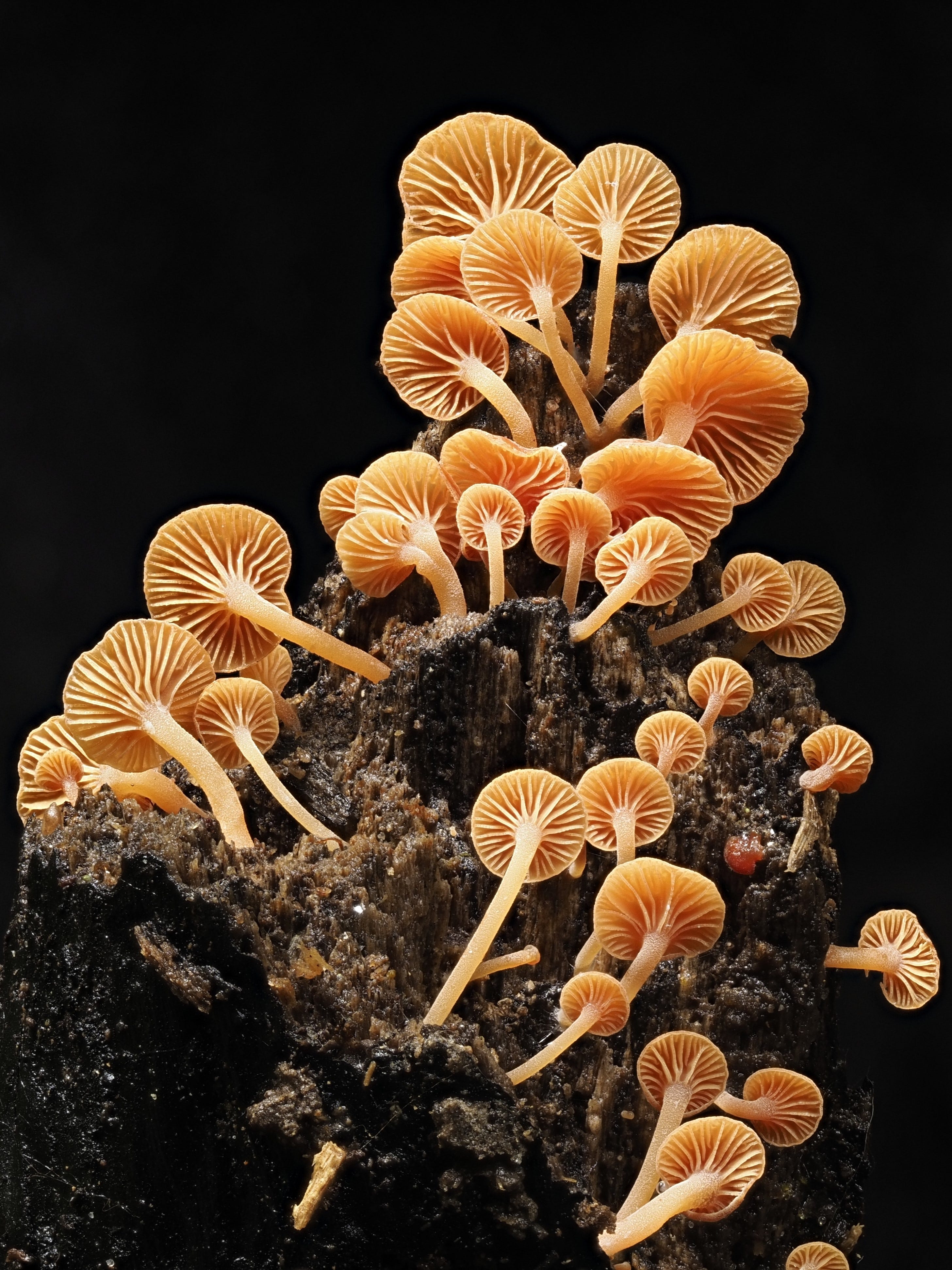
I smell rain and take cover in a covered gazebo to wait out the eventual downpour. It lets up and I make my way down, back towards the park headquarters. The rain starts up again. I’ve got my rain jacket on, and the canopy provides some cover.
I’m torn between staying out longer and taking my chances—the pull of the hunt, to keep my head down and see what may be found versus what I may miss, is disorienting. I decided to end the day’s exploration, planning to venture to the western part of the park and the Kiau View Trail tomorrow.


